

 Current position > Product detail
『Integrated intelligent vortex flowmeter』Related information(v cone flow meter|rotary gas meter|gallon meter|gear meter|metal tube rotameter|glass tube rotameter|nutating disk meter|transit time ultrasonic flow meter|wedge flow meter|pd meters|hydraulic flow meter|ultrasonic water flow meter|water flow meter|air flow meter|magnetic water flow meter|oxygen flow meter|gas flow meter|argon flow meter|air velocity meter|gasoline flow meter|fuel flow meter|ultrasonic water meter|digital water meter|nitrogen flow meter|solid flow meter|Oxygen tank flow meter|digital water flow meter|diesel fuel flow meter|steam flow meter|02 flow meter|compressed air flow meter|oil flow meter|liquid flow meter)
1. Application Status and Development Trends of Flowmeters
The Application Status and Development Trends of Flowmeters As the core equipment in the field of industrial measurement and metrology, flow meters have applications covering multiple industries such as energy, environmental protection, chemical industry, and transportation.. With breakthroughs in microelectronics technology, new materials, and intelligent technology, Jingyu flow meters are evolving from traditional mechanical methods to high-precision, intelligent, and modular directions. The following analysis will focus on the current application status, technology classification, market landscape, and future trends.
1. Application Status Industry Demand Driven Growth Global industrial output improvement and energy structure transformation drive the continuous expansion of flowmeter demand.
. In 2020, the production of flow meters in China reached 71.9153 million units, with a market demand of 74.6659 million units and a market size exceeding 9.987 billion yuan. Among them, the petrochemical industry has the highest proportion (64.63%), while urban gas (9.77%) and other fields (25.59%) have significant growth rates. Technological iteration accelerates the integration of intelligent microelectronics technology, MEMS processes, and the Internet of Things, enabling flow meters to have self diagnostic, adaptive, and remote calibration capabilities. For example, the Coriolis flowmeter measures mass flow rate through U-shaped tube vibration with an accuracy of 0.1%; MEMS thermal flow meters achieve high-sensitivity detection of small flow rates, with response times reduced to milliseconds. Diversified high-precision application scenarios: E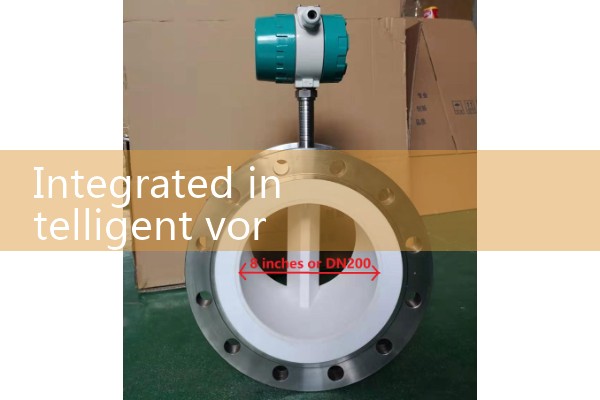
II. Classification and Characteristics of Mainstream Technologies Flowmeters can be divided into the following types according to their principles, each with technical advantages and limitations: Differential pressure flowmeter principle: Calculate flow rate through the pressure difference generated by the detection component in the pipeline.
. Application: It accounts for 1/4-1/3 of the total usage of flow meters and is widely used in the fields of oil and gas. Limitations: Narrow range ratio (usually 3:1), high installation requirements. Principle of electromagnetic flowmeter: Based on Faradays law of electromagnetic induction, measure the flow velocity of conductive liquids. Advantages: No pressure loss, corrosion resistance, suitable for fluids containing solid particles such as sewage and pulp. Limitations: Unable to measure gases or low conductivity liquids (such as petroleum). The principle of vortex flowmeter is to calculate the flow rate by using the vortex frequency generated by non streamlined bodies in the fluid. Features: Low pressure loss (only 1/4 of the orifice plate), suitable for steam and gas measurement. Challenge: Accuracy decreases at low Reynolds numbers