

 Current position > Product detail
『Coriolis Mass Flow Custody Transfer Requirements』Related information(v cone flow meter|rotary gas meter|gallon meter|gear meter|metal tube rotameter|glass tube rotameter|nutating disk meter|transit time ultrasonic flow meter|wedge flow meter|pd meters|hydraulic flow meter|ultrasonic water flow meter|water flow meter|air flow meter|magnetic water flow meter|oxygen flow meter|gas flow meter|argon flow meter|air velocity meter|gasoline flow meter|fuel flow meter|ultrasonic water meter|digital water meter|nitrogen flow meter|solid flow meter|Oxygen tank flow meter|digital water flow meter|diesel fuel flow meter|steam flow meter|02 flow meter|compressed air flow meter|oil flow meter|liquid flow meter)
 ```html
Coriolis Mass Flow Custody Transfer Requirements
Quick Answer: A Coriolis mass flow meter for custody transfer must deliver mass accuracy of at least 0.1 percent of rate, repeatability better than 0.05 percent, and a certified type approval like OIML R117 or API MPMS Chapter 5.6. Silver Instruments supplies DN15 to DN200 meters with direct mass output, density calibration, and flow computers for oil, LNG, and chemical metering stations. Most engineers skip the reading if they do not see the zero stability figure. Here it is: 0.02 kg/h on our DN25 sensor at reference conditions.
When you sell crude oil, LPG, jet fuel, or ethylene by weight, the flow meter becomes your cash register. A custody transfer Coriolis meter measures mass directly. You avoid the compensation errors that come with volumetric meters and separate densitometers. This is why fuel terminals in Indonesia, crude loading stations in Nigeria, and LNG bunker operators in Singapore install mass meters. But you must choose a device that meets local legal metrology rules. We have seen many projects delayed simply because the package did not include the right certificate or the density correction was not active.
1. Standards That Define a Custody Transfer Coriolis Meter
Different regions enforce different standards. In Europe and many parts of the Middle East, OIML R117 for liquid fuels and OIML R137 for gas measurement apply. The MID MI-001 directive covers meters for trade within the EU. In the Americas and most oil-producing countries, API Manual of Petroleum Measurement Standards Chapter 5.6 rules hydrocarbon measurement. Silver Instruments offers factory calibration with traceability to these norms. We can ship the meter with a Weights and Measures certificate from an accredited lab, not a generic calibration sheet. This detail matters when the local inspector visits your skid.
2. Accuracy, Repeatability, and Zero Stability Requirements
A custody transfer Coriolis meter usually needs mass flow accuracy of plus-minus 0.1 percent of reading for liquids and 0.35 percent for gas. Repeatability is separate. It must sit below 0.05 percent of rate. Here is the thing: many data sheets hide the zero stability value. Yet zero stability defines the low-end performance of the meter. A DN50 meter with a zero stability of 0.2 kg/h cannot hold 0.1 percent accuracy at a flow of 200 kg/h, even if the spec says 0.1 percent. In practice, for a 20:1 turndown, the effective accuracy range shrinks. Our SIL-CMF series specifies zero stability as low as 0.01 kg/h on small sensors. We print it on the nameplate. Density measurement is equally critical. A custody transfer meter needs density accuracy of at least 0.0005 g per cc. The meter then derives volume at reference temperature. Without this, you cannot convert mass to net standard volume for billing. Our meters use a built-in PT100 temperature sensor with 0.2 °C accuracy for density correction.
3. Installation and Process Conditions
Coriolis meters do not need long straight pipe runs like turbine meters. A distance of 5 DN upstream and 2 DN downstream is usually enough. But stress, vibration, and two-phase flow are the real enemies. A custory transfer skid installed outdoors in Saudi Arabia saw zero drift after startup because the pipe supports were too rigid. We added flexible hoses and the zero returned to normal. So always isolate the meter from pipe stress. When you measure crude oil with 6 percent water cut, expect extra uncertainty. The meter measures total mass. If the water content is not stable, the net oil calculation drifts. A lesson from the field: put a sampler or water-cut analyzer upstream and feed its value into the f
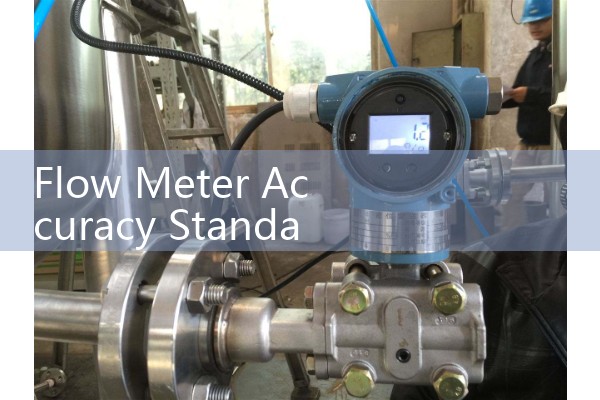
4. Silver Instruments SIL-CMF Custody Transfer Package
Silver Automation Instruments supplies the SIL-CMF series as a complete custody transfer package. It includes the Coriolis sensor, a remote or compact transmitter with 4-20 mA HART, Modbus RTU, and pulse outputs. The transmitter supports API tables for crude oil, refined products, and LPG. We add a flow computer when the terminal needs data logging, audit trails, and remote ticket printing. The sensor is available in stainless steel 316L or Hastelloy C22 for corrosive chemicals. Pressure ratings reach 250 bar for DN15 to DN80, and 150 bar up to DN200. Temperature ranges cover minus 196 °C for LNG to plus 200 °C for hot bitumen. Approvals include ATEX Zone 1, IECEx, and SIL 2 functional safety. In 2022, a gas oil distributor in Peru replaced ten positive displacement meters with our DN80 SIL-CMF custody transfer meters. Their batch error dropped from 0.3 percent to 0.07 percent. The payback was under five months through reduced product giveaway.
5. How to Specify and Request a Quote
Do not just ask for a Coriolis meter. You need to define a custody transfer measurement system. Tell us the fluid, its density at 15 °C, the operating pressure and temperature, the expected minimum and maximum mass flow rate, and the pipe size. Also confirm the certification body you need. For a crude oil terminal in Libya, the meter needed calibration traceable to the National Institute of Standards and Technology with a specific uncertainty budget. We prepared the documentation in two working days. You can visit our site to download the SIL-CMF data sheets. Because we are a direct manufacturer, pricing for customers in Southeast Asia, Africa, and Latin America is factory-level with no intermediary markups.
Frequently Asked Questions
Q: Can a standard Coriolis meter be used for LNG custody transfer?
A: Only if it has a vacuum-jacketed cryogenic design, OIML R137 or equivalent approval, and calibration at LNG temperatures. Silver Instruments offers a DN50 LNG custody meter with a double-walled housing and integrated PT100 for minus 162 °C service.
Q: What is the typical turndown ratio for custody Coriolis meters?
A: The sensor may claim 50:1, but custody approval often limits the effective range to 10:1 or 20:1 where accuracy stays within legal limits. We validate the full range during factory calibration.
Q: Do I need a separate flow computer with the Coriolis meter?
A: For simple check metering, the transmitter totalizer may be enough. For official custody transfer, you need an approved flow computer that handles API 21.1 flow weighting, density correction, and tamper-proof audit trails. We can supply a Schlumberger-grade computer bundled with the meter.
Q: Which pipe sizes does Silver Instruments offer for custody transfer?
A: Standard sizes are DN15, DN25, DN40, DN50, DN80, DN100, DN150, and DN200. We can engineer larger diameters for specific crude pipelines, but delivery time extends to 14 weeks.
Q: How often do custody transfer Coriolis meters need recalibration?
A: Zero verification every three months is recommended. Physical recalibration on a certified rig every two years is typical, unless the fluid is sticky such as waxy crude. In that case, we suggest an annual inspection of the measuring tubes.
Send us your fluid type, operating pressure (bar), temperature (°C), pipe size (DN), and maximum mass flow rate (kg/h or tonnes/h). Our engineering team at Silver Instruments will return a custody transfer Coriolis meter proposal and price within 24 hours.
```