

 Current position > Product detail
『Flow Meter 0.5 To 150 Ml/Min Performance Analytics』Related information(v cone flow meter|rotary gas meter|gallon meter|gear meter|metal tube rotameter|glass tube rotameter|nutating disk meter|transit time ultrasonic flow meter|wedge flow meter|pd meters|hydraulic flow meter|ultrasonic water flow meter|water flow meter|air flow meter|magnetic water flow meter|oxygen flow meter|gas flow meter|argon flow meter|air velocity meter|gasoline flow meter|fuel flow meter|ultrasonic water meter|digital water meter|nitrogen flow meter|solid flow meter|Oxygen tank flow meter|digital water flow meter|diesel fuel flow meter|steam flow meter|02 flow meter|compressed air flow meter|oil flow meter|liquid flow meter)
 ```html
Flow Meter 0.5 To 150 Ml/Min Performance Analytics: What Engineers Must Know Before Buying
Quick Answer: For flow rates between 0.5 and 150 mL/min, Coriolis mass flow meters deliver the best combination of accuracy, repeatability, and fluid compatibility. Silver Automation Instruments supplies micro Coriolis models with an accuracy of ±0.2% of reading down to 0.5 mL/min, operating across a wide turndown ratio. These meters output mass flow, density, and temperature simultaneously, cutting out the need for separate sensors.
Here is the thing. Most engineers start their search for a low flow meter by looking at minimum measurable flow rate only. In practice, the performance analytics that matter are response time, zero stability, pressure drop, and how the meter handles varying viscosity. A device that works perfectly at 150 mL/min may drift by 5 percent at 2 mL/min if the zero point is not stable. We have seen this on customer sites many times, particularly in catalyst dosing and fragrance injection lines.
Why Gravitometric Accuracy Tops Volumetric for Sub-150 mL/Min Flows
When you dose a reagent at 10 mL/min into a batch reactor, you care about the mass of the chemical, not just the volume. Temperature swings of 5 degrees Celsius can change the volume of acetone by nearly 1 percent. A gear meter will keep spinning and report that volume fine, but the actual mass delivered is wrong. This is why Coriolis technology dominates performance analytics in the 0.5 to 150 mL/min bracket. It reads mass directly, independent of fluid properties.
Silver Instruments equips its micro Coriolis line with a platinum RTD sensor built into the vibrating tube. The meter compensates for temperature effects at the measurement point, not in a remote transmitter. A food ingredients supplier in Thailand recently switched from a positive displacement meter to our SIL-CMF010 model for a vitamin premix dosing skid. They were adding 3.2 mL/min of a syrup with varying solids content. The gravimetric approach eliminated weekly calibration checks and saved them 14 hours of technician time per month.
Key Performance Metrics: Zero Stability, Turndown, and Pressure Drop
Zero stability often determines the real lower limit of a flow meter, not the advertised minimum scale. In a quiet environment, a micro Coriolis sensor can hold zero drift below 0.001 g/min. If your process runs overnight batches with stop-start flow, poor zero stability will inject an offset every time the pump cycles. Silver Instruments specifies a zero stability of 0.0008 g/min on its smallest tube model. That is practical data we verify against a NIST-traceable calibration rig in our factory.
Turndown ratio is another number that looks good on paper but collapses under process noise. A meter claiming 100:1 turndown sounds great until you realize the accuracy at 1 percent of full scale may be a mere 2 percent of reading. For a flow span of 0.5 to 150 mL/min, a true effective turndown of 50:1 or better is critical. Because many lab-scale reactors ramp from priming flow at 5 mL/min up to full injection at 120 mL/min. Silver Instruments promises a turndown of up to 80:1 with reading accuracy holding within ±0.2% from 2 percent of span to full scale. Do not confuse this with percent of full scale accuracy, which masks huge errors at low flow.
Pressure drop gets overlooked until the pump cannot overcome it. Thermal mass meters for low gas flows often have a tiny sensor bore that creates a 2-3 bar drop at 100 mL/min liquid equivalent. In contrast, a micro Coriolis sensor with a dual straight tube design imposes less than 0.8 bar at 150 mL/min for water-like viscosity. For a customer in Argentina operating a solvent recovery system, this meant they could use a smaller peristaltic pump, saving roughly 600 USD on the pump head alone.
Selecting the Right Technology: Coriolis, Thermal Mass, or Oval Gear
Thermal mass flow meters dominate gas micro flow applications and some low-viscosity liquids, but their performance analytics degrade fast with changing fluid composition. If your recipe changes mix ratio by even 2 percent, the thermal conductivity shifts, and the meter output drifts without recalibration. Oval gear meters handle viscous, clean liquids like diesel or lubricating oil reliably at 50 to 150 mL/min, but they struggle below 5 mL/min because leakage past the gears becomes a significant portion of the measured volume. A paint manufacturer in Southeast Asia tried using oval gear meters for dosing 1.5 mL/min of cobalt octoate catalyst. The repeatability was ±8% due to slip. After switching to a Silver Instruments micro Coriolis
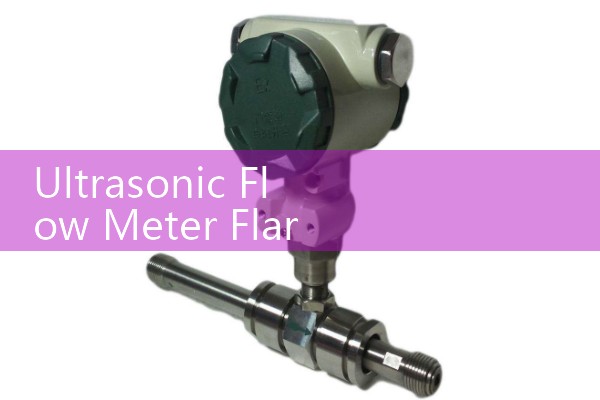
Coriolis meters excel when you need mass flow, density checking, and immunity to viscosity changes. Most engineers skip the density output, but it is a free diagnostic. If your acetone density suddenly reads 0.82 g/cc instead of 0.79 g/cc, you have either a temperature issue or solvent contamination. A QC lab in Saudi Arabia uses this density alarm to catch wrong solvent mixes before a 200-liter batch is ruined.
Installation Rules That Impact 0.5 to 150 mL/Min Performance
Because the flow rates are so low, any external vibration or pipe strain will show up in the signal. Mount the meter on a solid bracket, avoid cantilevering from a thin tube stub. Silver Instruments ships every micro Coriolis meter with a factory-fitted mounting plate and vibration isolation grommets. Do not install a piston pump directly upstream without a pulsation dampener. A single piston pump creates catastrophic flow noise at 1 mL/min. One of our distributors in Nigeria learned this the hard way when a customer complained about fluctuating readings. Adding a simple 10 cc dampening vessel fixed the issue overnight.
Also, bubble purging is mandatory. At 0.5 mL/min, a tiny 50-micron bubble clinging to the tube wall acts like a flow restriction. Many customers incorporate a small bubble trap just before the meter inlet. Silver Instruments can supply a complete engineered skid with an integrated bubble trap, isolation valves, and a bypass for flushing. For a cosmetics manufacturer in Brazil filling serums at 2 mL per vile, this skid cut scrap rates by 3% simply by eliminating air spikes.
Silver Instruments Recommended Models and How to Get a Quote
For the 0.5 to 150 mL/min liquid flow range, we recommend the SIL-CMF-Micro series with a DN1.5 or DN3 process connection. The transmitter outputs mass flow, density, and temperature via 4-20 mA HART, Modbus RTU, or digital frequency. It carries ATEX Zone 1 certification for solvent-based processes. If you need to measure gas micro flows at equivalent mass rates, the SIL-TMF-Micro thermal mass meter covers 1 to 500 sccm with a fast response time of less than 200 ms.
Send us your fluid name, viscosity in cP, minimum and maximum flow rate in mL/min, operating temperature in °C, and pipe size in DN. Our applications team will return a technical proposal with a curve showing accuracy versus flow rate for your specific fluid. Reach out at [email protected] or see the micro Coriolis model details at flow-meter.com.au/micro-coriolis.
FAQ: Flow Meter 0.5 To 150 Ml/Min Performance Analytics
What is the typical response time for a micro Coriolis meter in this range?
Silver Instruments micro Coriolis meters achieve a response time of 100 ms standard, damped to 500 ms for noisy processes. You can adjust the damping value from the HART interface. This is fast enough to catch short injection pulses in pharma filling lines.
Can one meter handle both 0.5 mL/min and 150 mL/min accurately?
Yes, with a high turndown ratio meter. Choose a meter whose full scale is close to 150 mL/min but whose zero stability supports 0.5 mL/min. The SIL-CMF016 model ranges from 0.48 to 160 mL/min for water-like liquids with a reading accuracy of ±0.2% across most of the span. Always specify your lowest expected flow when requesting a calibration.
How do you calibrate such a low flow meter?
We calibrate every meter on a gravimetric system with a high-precision balance of 0.1 mg resolution. Water is used as the test fluid unless the customer requests calibration with the actual process fluid. The calibration report lists five points from Qmin to Qmax, and we can add an optional zero verification point at 0.5 mL/min.
Does viscosity affect the measurement at 10 mL/min?
With Coriolis mass meters, viscosity does not affect mass flow accuracy. High viscosity may increase pressure drop slightly, but the meter still reports true mass. For fluids above 100 cP, a slightly larger tube inner diameter is selected to keep pressure drop low. Tell us your viscosity data when you inquire.
What maintenance does a micro Coriolis meter need when dosing solvents daily?
Almost none apart from periodic zero checks. Small bore tubes have no moving parts, seals, or bearings. The main failure mode is plugging from dirty process fluid. Install a 10-micron inline filter upstream. A pharma client in Vietnam runs the same SIL-CMF meter 24/7 for 18 months with no maintenance beyond quarterly zero verification.