

 Current position > Product detail
『LNG Coriolis Flow Meter Cryogenic Measurement Guide』Related information(v cone flow meter|rotary gas meter|gallon meter|gear meter|metal tube rotameter|glass tube rotameter|nutating disk meter|transit time ultrasonic flow meter|wedge flow meter|pd meters|hydraulic flow meter|ultrasonic water flow meter|water flow meter|air flow meter|magnetic water flow meter|oxygen flow meter|gas flow meter|argon flow meter|air velocity meter|gasoline flow meter|fuel flow meter|ultrasonic water meter|digital water meter|nitrogen flow meter|solid flow meter|Oxygen tank flow meter|digital water flow meter|diesel fuel flow meter|steam flow meter|02 flow meter|compressed air flow meter|oil flow meter|liquid flow meter)
LNG Coriolis Flow Meter Cryogenic Measurement Guide
Quick Answer: A Coriolis mass flow meter is the most reliable choice for LNG custody transfer and loading. It measures mass flow, density, and temperature directly at cryogenic temperatures down to -196 °C. Silver Automation Instruments supplies factory tested cryogenic Coriolis meters that keep accuracy within ±0.15% even when liquid methane drops to -162 °C.
LNG measurement is unforgiving. A gas bubble in the line, a cold joint that leaks, or a sensor housing not rated for thermal shock will scrub profits in a single unloading cycle. Most engineers who run small scale LNG terminals in Southeast Asia or LNG truck loading skids in the Middle East skip the sensor theory. They want a meter that arrives with a cryogenic certificate, bolts into a DN25 or DN80 line, and holds zero after cooldown. Here is how to get that result.
Why Coriolis Meters Beat Other Technologies on Cryogenic LNG
Turbine meters freeze. Ultrasonic meters fight signal attenuation when pipe walls contract. Differential pressure devices need a flow computer and still miss mass flow. A Coriolis meter gives you mass flow directly. No pressure compensation. No density lookup tables. For a small terminal unloading a 40 foot ISO tank, that is one less field device to calibrate at 3 a.m. in the rain.
We have seen this on customer sites many times. A gas distributor in Vietnam switched from an ultrasonic meter to a Silver Instruments DN50 cryo Coriolis for truck loading. The ultrasonic meter drifted by 0.8% after cooldown. The Coriolis meter held a repeatability of ±0.05%. The plant manager stopped double checking the weighbridge ticket every Tuesday.
Design Details That Survive Boil Off and Thermal Stress
An LNG grade Coriolis flow tube must handle a rapid drop from tropical 35 °C to -162 °C in under 30 minutes. Standard 316L sensor bodies can crack. Silver Automation Instruments uses 316L stainless steel with full penetration welds and a secondary containment rated to 40 bar. The driver coil and pickoff coils are potted in a compound that stays flexible at -196 °C. The sensor housing is purged and backfilled with argon before sealing. No moisture inside means no ice crystal noise when the tube oscillates.
Because the meter also measures density, you can detect phase change. If the cryogenic pump loses suction, the density reading drops from 430 kg/m³ to something much lower. The meter sees bubble formation before a vapor lock trips the overfill alarm. The 4-20 mA HART output and Modbus RTU send density, mass flow, and sensor temperature to the control room with a single device.
Sensor Size and Process Connection Selection
Do not oversize the meter. An oversized Coriolis sensor shows a large pressure drop across the tube and low signal amplitude. For a truck loading skid moving 12 000 kg/h of LNG, a DN25 meter works well. A small scale marine bunkering line at 45 000 kg/h often fits a DN50. Our engineers recommend keeping the mass flow rate between 30% and 80% of the sensor nominal capacity. That window keeps the signal to noise ratio high and the pressure drop below 0.5 bar.
Flange connections follow ANSI 300 lb or PN40 with a stainless steel spiral wound gasket. A few terminals in Indonesia and Nigeria use a cryogenic flange adapter to reduce heat leak into the pipe. The adapter uses a thin wall Invar section that limits conductive cooling. Silver Instruments pairs the meter with a factory fitted secondary pressure housing. The housing has a burst disc set at 15 bar. If the flow tube ever develops a crack, LNG vents to a safe location instead of flooding the electronics housing.
Installation Pitfalls Most Skids Face in the First Year
Zero point drift is the number one support ticket. A cold meter installed with pipe stress shows a negative mass flow reading when the line is closed. The fix is simple. Install the meter with a flexible hose or a piping expansion loop on the inlet and outlet. Perform the zero calibration after the meter has been at -140 °C for at least two hours. Do it with liquid methane in the tube, not with nitrogen gas. A zero done on n
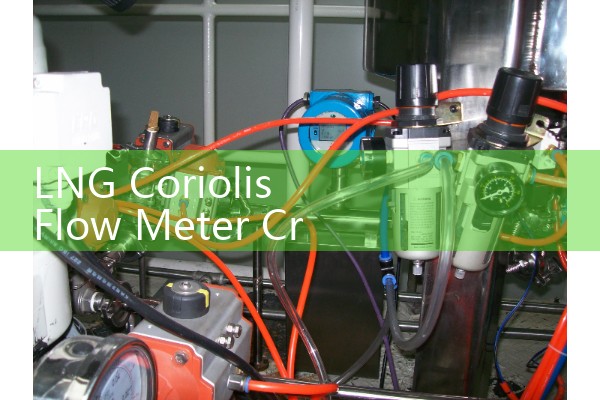
Another common problem is condensation on the transmitter housing. A cryo meter body acts as a cold sink. Humid air in a Bangladesh coastal terminal condenses directly on the aluminum housing. Water tracks down the cable gland into the electronics. Our factory seals the housing to IP67 and ships it with a stainless steel breather drain. We also recommend a simple rain shield bent from 0.5 mm stainless steel sheet. It costs less than USD 25 locally and cuts moisture ingress by a factor nobody measures but everyone appreciates.
Factory Cryogenic Calibration and Traceability
A water calibration is not enough for LNG. Silver Automation Instruments calibrates each cryogenic Coriolis meter on liquid nitrogen at -196 °C. The calibration rig uses a master meter chain traceable to PTB or NIST. We adjust the meter factor across three points: 20%, 50%, and 85% of nominal flow. The calibration report lists the meter K factor, density offset, and linearity error. A paper certificate ships with the unit. A digital copy with serial number PDF is sent by email within 24 hours after the factory signs off.
For terminals that need a higher confidence level, we offer a 5 point calibration and an optional third party witness. The meter tag carries the tag number you provide, a QR code, and a cryogenic service label with a red border. This label is visible during a safety walkdown and prevents a maintenance crew from swapping the sensor with a general purpose model.
Recommended Silver Instruments Models for LNG Service
The SLN-C Cryogenic Series covers line sizes from DN15 to DN150. The sensor is a bent tube design optimized for low flow sensitivity. It measures up to 150 000 kg/h with a turndown ratio of 20:1. The transmitter offers 4-20 mA HART, pulse, and Modbus RTU outputs. Explosion proof certification meets ATEX Zone 1 and IECEx requirements. A remote mounted transmitter keeps the LCD display away from the cold sensor body. The display reads mass flow in kg/h, density in kg/m³, and temperature in °C.
For very small scale lab or pilot plant applications, the SLN-C-Micro with DN6 or DN10 connections handles flow down to 12 kg/h. This is useful for additive injection into a methane stream or for measuring liquid nitrogen in a test facility. We recently shipped two DN10 units to a cryogenic research lab in Australia. The engineer there needed to measure 1.5 cP liquid oxygen at -183 °C. The standard 316L sensor performed within spec for six months without any drift.
FAQ
Can a standard Coriolis meter measure LNG? No. A standard meter with a non cryogenic housing and standard potting material will fail. The sensor must be built with materials rated for -196 °C and include a secondary containment shell. Always ask for a cryogenic calibration certificate.
What is the typical accuracy for LNG custody transfer? Silver Instruments cryogenic Coriolis meters achieve ±0.15% of reading for mass flow and ±2 kg/m³ for density under stable conditions. With a 5 point factory calibration, the linearity improves to ±0.1%.
How do I prevent two phase flow at the sensor? Keep the meter inlet pressure at least 1.5 bar above the bubble point pressure at the measured temperature. Mount the sensor at the lowest point of the pipe run to keep it liquid full. A back pressure regulator downstream helps.
Do I need a flow computer for LNG measurement? Not with a Coriolis meter. The transmitter provides direct mass flow and density outputs. If you need a net volume at standard conditions, the transmitter can calculate it internally using the measured density and a stored reference density.
What information should I send for a quotation? Send us your pressure in bar, temperature in °C, pipe size in DN, and the maximum flow range in kg/h. Also mention the hazardous area classification and preferred output signal. We will return a datasheet and a commercial offer within one working day.