

 Current position > Product detail
『Clamp On Flow Meter Ultrasonic: Transit-Time Wave Pipe Velocity Senses』Related information(v cone flow meter|rotary gas meter|gallon meter|gear meter|metal tube rotameter|glass tube rotameter|nutating disk meter|transit time ultrasonic flow meter|wedge flow meter|pd meters|hydraulic flow meter|ultrasonic water flow meter|water flow meter|air flow meter|magnetic water flow meter|oxygen flow meter|gas flow meter|argon flow meter|air velocity meter|gasoline flow meter|fuel flow meter|ultrasonic water meter|digital water meter|nitrogen flow meter|solid flow meter|Oxygen tank flow meter|digital water flow meter|diesel fuel flow meter|steam flow meter|02 flow meter|compressed air flow meter|oil flow meter|liquid flow meter)
Clamp On Flow Meter Ultrasonic Transit Time Wave Pipe Velocity Sensing
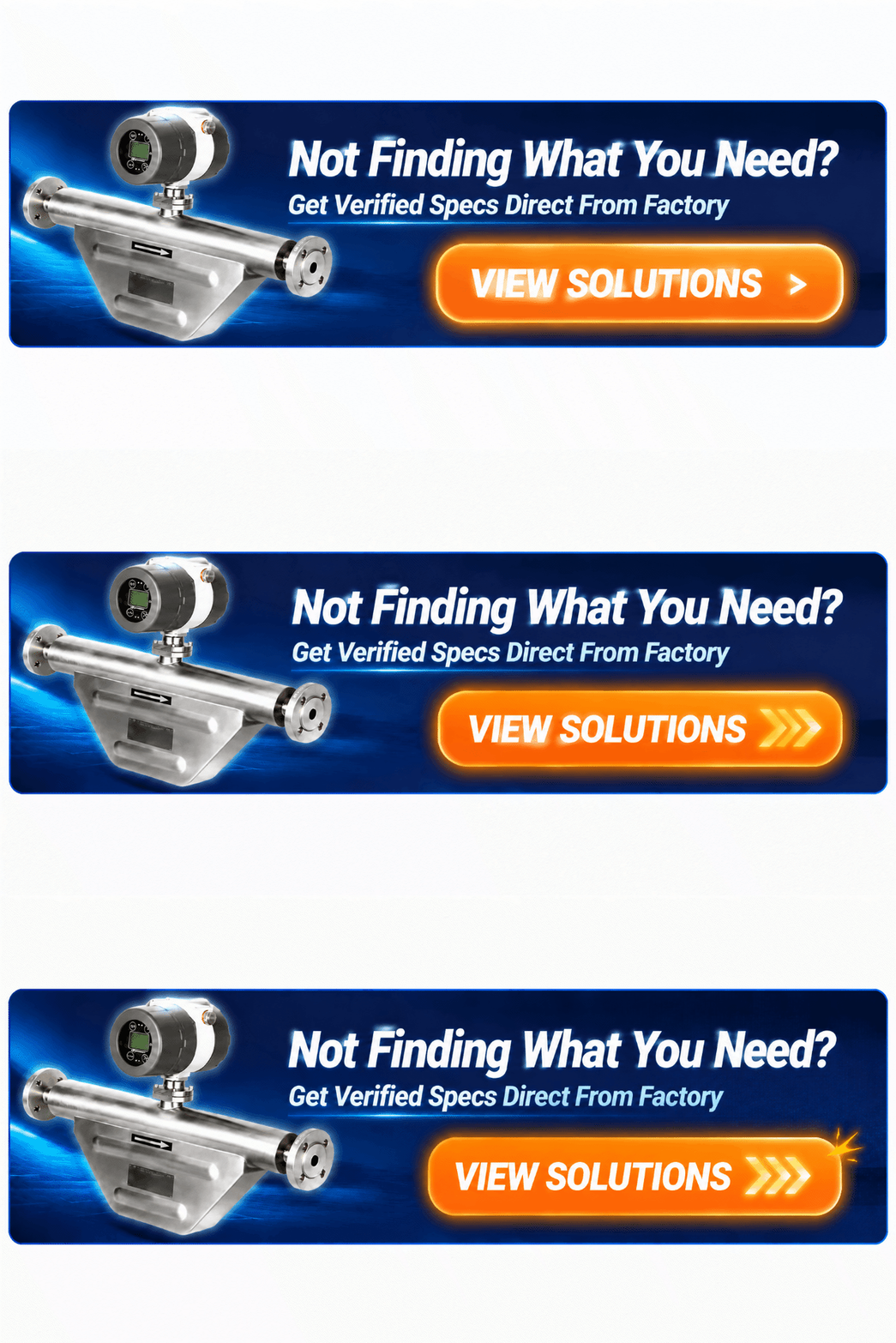
Quick Answer: For clamp on flow meter ultrasonic transit time wave pipe velocity sensing, the meter reads velocity from outside the pipe wall. It clamps two transducers onto the pipe and measures the time difference between sound waves moving upstream and downstream. Silver Automation Instruments supplies this type of flow meter for clean liquids in pipe sizes from DN15 to DN6000.
How Transit Time Pipe Velocity Sensing Works
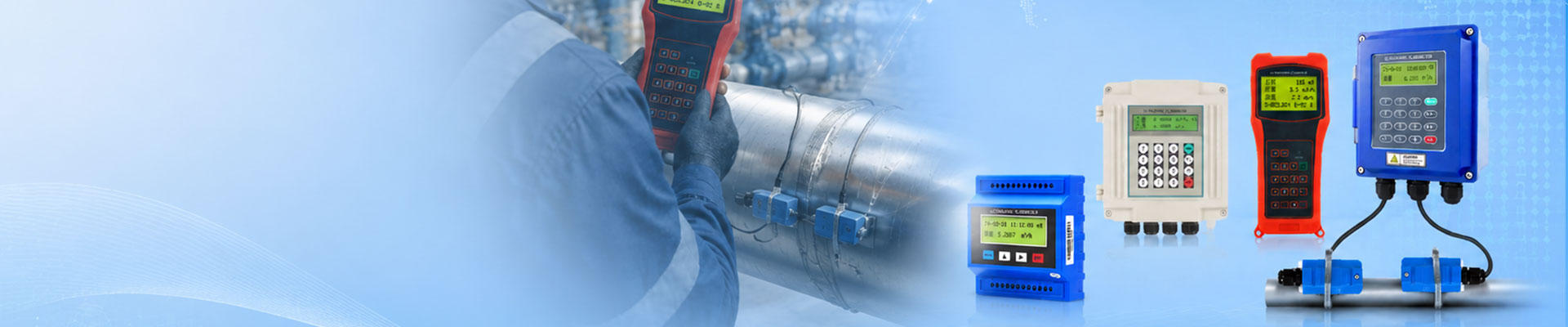
Each clamp on meter uses two transducers. One sends an ultrasonic pulse downstream. The other sends a pulse upstream. When fluid moves, the downstream signal travels faster. The meter measures the time difference in nanoseconds. That time difference is proportional to average pipe velocity. Flow rate equals velocity times internal pipe area.
You enter pipe outer diameter, wall thickness, pipe material, liner material, and fluid type. The meter then calculates path length and sound speed. Most engineers skip this part. A wrong pipe schedule or liner value changes the flow total. In practice, most errors come from pipe data, not from the transducer signal.
Pipe Data and Installation Rules
Measure outer diameter with a tape, not from the pipe label. Use an ultrasonic thickness gauge for wall thickness. On a DN100 carbon steel pipe, a 2 mm wall error can move the flow reading by 2 to 4 percent. We have seen this on customer sites many times. A dairy plant in Jakarta entered SCH 40 but the actual pipe was SCH 80. The totalizer read high until the wall value was corrected.
For horizontal lines, install the transducers at the 9 o clock and 3 o clock positions. This avoids sediment at the bottom and gas at the top. Keep 10D of straight pipe upstream and 5D downstream. Use the V method for DN15 to DN100. Use the Z method for larger pipes where signal strength drops. Remove paint, rust, and loose scale before clamping. Apply coupling gel evenly. On insulated pipes, cut back insulation or use a longer spacer bar. Do not install on a downflow vertical pipe that may run partly full.
Where These Meters Fit Best
The transit time clamp on meter works well on clean water, demineralized water, RO permeate, cooling water, glycol mixtures, light chemicals, acids, alkalis, and light hydrocarbons. Avoid raw sewage with high solids, slurries, cement grout, and multiphase gas lines. A desalination plant in Chile uses a clamp on meter on brine transfer pipe at 8 bar and 35 °C. A paint manufacturer in Ho Chi Minh City uses one on solvent feed lines with 4-20 mA HART output to the control room. A fuel depot in Dammam uses one on diesel transfer lines at 40 °C and 10 bar with MODBUS RS485 output.
This meter does not contact the fluid. There is no pressure drop. You avoid cutting, welding, and flange cost. This is useful for retrofit jobs, temporary veri
Outputs and Technical Range
Standard output options include 4-20 mA HART, MODBUS RTU RS485, pulse, and relay. Optional PT100 inputs support heat metering for chilled water and hot water loops. Supply power can be 24 V DC or 85 to 265 V AC. Transducer protection is IP67. The transmitter housing is often IP65 or better. Accuracy on a clean straight run is plus or minus 0.5 to 1.0 percent of reading. Velocity range from 0.01 m/s to 12 m/s covers most liquid process lines. Pipe sizes range from DN15 to DN6000 depending on transducer type.
Some sites need ATEX Zone 1 or Zone 2 for solvent or fuel areas. We can supply Ex rated transducers and remote transmitters. Send us the hazardous area classification with the pipe data.
What to Send for a Firm Quote
For a firm price, send us your pipe size (DN), pipe material, outer diameter and wall thickness if known, fluid type, temperature (°C), pressure (bar), and flow range. Tell us if the pipe is lined or insulated. Include output preference such as 4-20 mA HART, RS485 MODBUS, pulse, or a local display. If the area is hazardous, tell us the zone. That is all we need to select the transducer size and mounting kit.
Call Silver Automation Instruments at +86-25-68650347 or WhatsApp +86-25-52155837. WeChat: +86 15365082610. You can also ask for a split type transmitter if the pipe is in a pit or under water.
FAQ: Clamp On Ultrasonic Flow Meter Transit Time Sensing
1. Can a clamp on meter measure wastewater?
A clamp on transit time meter can measure screened or clarified wastewater if the liquid is mostly clean and free of large solids. Raw sewage with heavy solids needs a Doppler meter or an electromagnetic flow meter.
2. What pipe materials work with these sensors?
Carbon steel, stainless steel, copper, PVC, HDPE, and most metal or plastic pipes work. Lined pipes with air gaps or loose liners create signal loss. The pipe wall must transmit sound.
3. What accuracy can I expect?
On a clean straight run, expect plus or minus 0.5 to 1.0 percent of reading. Accuracy drops with short straight runs, poor pipe surface, gas pockets, or wrong pipe parameters.
4. Can the meter handle hot water or chilled water?
Yes. Transducer temperature limits depend on the model. Many standard transducers go from minus 40 °C to 150 °C. High temperature versions can go to 200 °C. Add PT100 inputs if you need heat energy totals.
5. Does installation require shutting down the line?
No. The transducers clamp onto the outside of the pipe. You can install them while the pipe is running, as long as the surface is safe to access and clean.