

 Current position > Product detail
『hydraulic oil flow meter 10 L/min』Related information(v cone flow meter|rotary gas meter|gallon meter|gear meter|metal tube rotameter|glass tube rotameter|nutating disk meter|transit time ultrasonic flow meter|wedge flow meter|pd meters|hydraulic flow meter|ultrasonic water flow meter|water flow meter|air flow meter|magnetic water flow meter|oxygen flow meter|gas flow meter|argon flow meter|air velocity meter|gasoline flow meter|fuel flow meter|ultrasonic water meter|digital water meter|nitrogen flow meter|solid flow meter|Oxygen tank flow meter|digital water flow meter|diesel fuel flow meter|steam flow meter|02 flow meter|compressed air flow meter|oil flow meter|liquid flow meter)
Hydraulic Oil Flow Meter for 10 L/min: The Practical Guide for System Builders and Service Teams
Quick Answer: A hydraulic oil flow meter for 10 L/min must handle viscosities from 10 to 500 cSt, pressures up to 420 bar, and dirty oil with particles you cannot avoid in real circuits. Silver Instruments supplies positive displacement oval gear meters and turbine meters that deliver ±0.5% reading accuracy at these low flows, with 4-20 mA HART output and direct G1/4 or DN6 process connections. Most engineers send us three values to get a quote: continuous flow range, maximum working pressure, and oil grade.
Why a Standard Water Meter Fails on Hydraulic Oil at 10 L/min
Hydraulic oil is not water. Viscosity at 40 °C typically sits between 32 and 68 cSt for ISO VG grades, and it changes fast with temperature. A turbine meter calibrated for water at 1 cSt will under-register by 15% to 30% on cold HLP 46 oil. At 10 L/min, the Reynolds number in a DN10 pipe often stays below 4000. That means flow is transitional or laminar. In laminar flow, the velocity profile is parabolic, and simple turbine or vortex meters lose linearity fast. This is not a theory problem. We have seen repair shops in Malaysia and Egypt swap a generic water meter into a hydraulic test bench, only to get readings that drift from 9.5 to 13 L/min across a morning as the oil warms up.
Meter Types That Actually Work at 10 L/min on Hydraulic Oil
Oval gear flow meters are the first choice for most hydraulic test rigs and offline filtration carts. They are positive displacement devices. Two oval rotors lock and sweep a known volume per revolution. Viscosity changes have almost no effect on accuracy. A typical Silver Instruments OM series oval gear meter with G1/4 ports and a 0.5 to 20 L/min range will hold ±0.5% of reading from 10 cSt up to 500 cSt. That covers mineral oils, phosphate esters, and even vegetable-based hydraulic fluids used in marine stern tube systems. Output options: two-channel pulse for PLC totalizing, or 4-20 mA with HART for a DCS. Protection is IP67. Wetted parts come in cast iron for standard circuits or 316L stainless for water-glycol fluids and offshore cranes.
Turbine flow meters are lighter and cheaper, but they need a viscosity correction if your oil temperature swings more than 20 °C. A DN6 or DN8 turbine with hard alloy bearings can survive particles up to 50 µm if you install a 60-mesh Y strainer upstream. At exactly 10 L/min, a properly sized turbine will produce a pulse resolution around 1000 pulses per liter. This is enough for dynamic tests like cylinder leakage measurement. The catch: if your system runs at 200 bar and a relief valve cracks, the flow surge can overspeed the rotor beyond 130% of the rated range and damage the bearing. So you have to spec the meter with a 1.5x safety margin on flow, not just on pressure. Silver Instruments turbine meters for hydraulic oil come with a calibrated K-factor plot at 32, 46, and 68 cSt. You pick the curve that matches your oil, enter it into the PLC, and you get a corrected flow reading without a separate flow computer.
Pressure Rating and Safety: Hydraulic Oil Is Not Forgiving
A 10 L/min flow meter can sit in a low-pressure return line, a charge pump line, or a high-pressure sense line. Each location demands a different pressure class. Return lines typically stay below 30 bar. Charge circuits in hydrostatic transmissions often run at 20 to 40 bar. But if you install the meter on the main pump case drain line, pressure can spike to several hundred bar during a blocked filter event. We learned this from a customer in Vietnam who mounted a standard oval gear meter rated for 55 bar on a pump test bench. A test sequence blocked the outlet, and the meter housing cracked at 180 bar. Since then, Silver Instruments offers a high-pressure oval gear flow meter with a nodular cast iron body rated for 400 bar burst pressure and 280 bar continuous working pressure. The meter uses double O-ring sealing and a reinforced cover plate. For hydraulic applications, always specify the maximum system pressure, not just the normal operating pressure. The price difference between a 55 bar and a 280 bar version is around 30%, but the cost of one hydraulic oil spill and downtime is ten times that.
Signal Output, Display, and Connection to Your Control System
Most service teams want a local display so they can read flow rate and totalized volume hands-free while adjusting a valve. Silver Instruments supplies meters with a backlit LCD that shows L/min, total liters, and optionally temperature from a built-in PT100. The 4-20 mA output is loop-powered, 2-wire, with HART 7 protocol on request. Pulse outputs are NPN or PNP, 10 to 30 VDC supply.
Installation Pointers for Repeatable 10 L/min Measurement
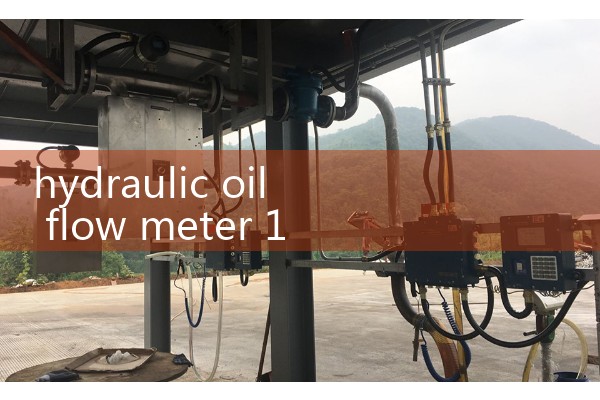
Most engineers skip the straight run requirements on positive displacement meters because the meter chambers are volume-based. That is true for accuracy, but not for longevity. If you mount an oval gear meter right after a 90-degree elbow and a partially open ball valve, the flow jet accelerates unevenly and causes uneven wear on the rotor tips. You will still measure correct volume for the first thousand liters, then the meter starts to under-read as the bypass leakage increases. A simple rule: give five pipe diameters of straight run upstream and two downstream. At DN10, that is 50 mm and 20 mm. Easy to fit. Use a Y strainer with 200 µm mesh directly upstream. Clean it during every oil change. In one case, a plastic injection machine builder in Thailand saw a 4% drift after six months. The strainer was not cleaned, and a layer of varnish and metal fines created a permanent pressure drop that partially stalled the rotors at low flow. After cleaning, the meter returned to within 0.6% of the factory calibration.
Real-World Numbers from Hydraulic Test Benches
We recently supplied ten OM-G04 oval gear flow meters to a pump repair center in Surabaya, Indonesia. They test gear pumps and piston pumps in a closed loop with HLP 46 oil at 50 °C. Continuous flow during pump break-in is 8 to 12 L/min. The meters read on a Siemens PLC via 4-20 mA, and the operator compares measured pump delivery against the nameplate spec. The meters have been running for 14 months without recalibration. Another customer, a marine steering gear service company in Dubai, uses our turbine meters with 316L body on a phosphate ester fluid. Flow range: 2 to 15 L/min. Wetted material compatibility was the deciding factor. They had previously used an aluminum-body meter that corroded from water ingression. The 316L version solved it. The meter also carries ATEX Zone 2 certification for their offshore containerized test unit.
How to Request a Quote for a 10 L/min Hydraulic Oil Flow Meter
Don’t just email “Need flow meter 10 L/min.” That creates a long back-and-forth. Here’s what speeds up the process: Send us your oil type (mineral, synthetic, water-glycol, phosphate ester), viscosity at 40 °C (e.g., 46 cSt), continuous operating pressure (bar), maximum system pressure (bar), pipe size (DN or G thread), required output (pulse, 4-20 mA, or RS485), and whether you need ATEX, IECEx, or local panel display. We will select the correct meter model, wetted material, O-ring compound, and process connection. Typical delivery to Southeast Asia, Australia, the Middle East, and South America is 3 to 7 working days via DHL. Silver Instruments ships from our calibration lab in China with a 5-point calibration certificate traceable to national standards. Ask for a quote at flow-meter.com.au or directly email [email protected]. Most hydraulic oil flow meter inquiries for 10 L/min are answered within 4 hours during Asian business hours.
Frequently Asked Questions
Which flow meter type is most accurate for hydraulic oil at 10 L/min?
Oval gear positive displacement meters hold ±0.5% of reading across a wide viscosity range and are unaffected by pulsating flow from piston pumps.
Can I use a turbine meter for ISO VG 68 hydraulic oil at low flow?
Yes, but you must apply a viscosity correction curve. Without correction, a turbine calibrated for 1 cSt water will read 20-30% low on cold VG 68 oil.
What pressure rating do I need for a pump case drain application?
Case drain pressure is normally low, but blocked filter events can spike to several hundred bar. Specify a meter body rated for at least 280 bar continuous to avoid cracked housings.
Do I need a straight run for an oval gear meter?
Not for volume accuracy, but a short straight run of 5 DN upstream extends rotor life by reducing uneven flow wear. Always fit a strainer.
How do I get a fast quote from Silver Instruments?
Include your flow range, oil viscosity, working and maximum pressure, pipe size, output signal, and any hazardous area requirement. The team responds same-day.