

 Current position > Product detail
『Jilin Vortex Flow Meter』Related information(v cone flow meter|rotary gas meter|gallon meter|gear meter|metal tube rotameter|glass tube rotameter|nutating disk meter|transit time ultrasonic flow meter|wedge flow meter|pd meters|hydraulic flow meter|ultrasonic water flow meter|water flow meter|air flow meter|magnetic water flow meter|oxygen flow meter|gas flow meter|argon flow meter|air velocity meter|gasoline flow meter|fuel flow meter|ultrasonic water meter|digital water meter|nitrogen flow meter|solid flow meter|Oxygen tank flow meter|digital water flow meter|diesel fuel flow meter|steam flow meter|02 flow meter|compressed air flow meter|oil flow meter|liquid flow meter)
1. How to calculate the flow rate measured by a vortex flowmeter?
E=KBdV (where E - is the signal voltage (V) between the electrodes); B -- Magnetic flux density (large impulse T); D - Measure the inner diameter of the tube (M); V - Average flow velocity (M/S). )In the equation, K and d are constants. Since the excitation current is constant, B is also constant. Therefore, from E=KBdV, it can be seen that the volume flow rate Q is proportional to the signal voltage E, that is, the signal voltage E induced by the flow velocity is linearly related to the volume flow rate Q. Extended Data Vortex Flow Meter is a volumetric flow meter produced based on the Karman vortex based simulation principle for measuring the volume flow rate, standard condition volume flow rate, or mass flow rate of gases, vapors, or liquids. Mainly used for flow measurement of industrial pipeline media fluids, such as gases, liquids, steam, and other media. The characteristics of vortex flowmeter are small pressure loss, large range, high accuracy, and it is almost unaffected by parameters such as fluid density, pressure, temperature, viscosity, etc. when measuring volumetric flow rate under working conditions. No movable mechanical parts, therefore high reliability and low maintenance. The instrument can maintain a stable and long-lasting pulse count. The vortex flowmeter adopts a piezoelectric stress sensor with high reliability and can operate within a temperature range of -20 ℃ to+250 ℃. Reference source: Baidu Baike - Electromagnetic Flow Meter Reference source: Baidu Baike - Vortex Flow Meter
2. What flow meters are generally used on steam pipelines?
The commonly used flow meters on steam pipelines mainly include the fol
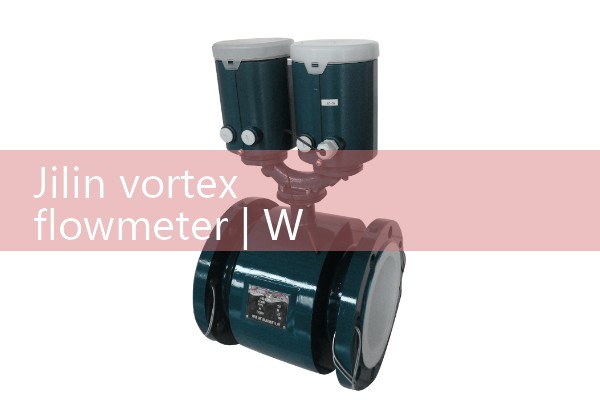
1. Working principle of vortex flowmeter: Based on the Karman vortex street principle, the steam flow rate is calculated by measuring the alternating vortex frequency generated by the impact of steam fluid on the triangular cylinder vortex generator.
. The vortex frequency is directly proportional to the average flow velocity of the fluid, and the volumetric flow rate can be calculated by combining the cross-sectional area of the pipeline. Applicable conditions: Preferred for steam pipeline temperature ≤ 300 ℃, with low cost and wide applicability. Large measurement range, low pressure loss, high accuracy (usually ± 1%~± 2%), and high reliability. No movable mechanical parts, low maintenance, and long-term stable instrument parameters. Structural composition: sensors, converters, display instruments. Sensors (such as piezoelectric stress sensors) convert vortex mechanical effects into electrical signals and output flow values after processing. Signal output: Supports analog signals (4-20mA) or digital signals (pulse signals) for easy data transmission and reading. Image: The vortex flowmeter is disassembled to measure the vortex frequency and calculate the flow rate Working principle of differential pressure flowmeter: Based on Bernoulli equation and flow continuity equation, the flow rate is determined by measuring the differential pressure generated by throttling devices (such as orifice plate, nozzle, V-cone). Common type: Orifice flowmeter: simple structure, but significant pressure loss. V-cone flowmeter: utilizing the V-cone throttling effect, with