Current position > Product detail
synthetic oil flow meter
『synthetic oil flow meter』Related information(v cone flow meter|rotary gas meter|gallon meter|gear meter|metal tube rotameter|glass tube rotameter|nutating disk meter|transit time ultrasonic flow meter|wedge flow meter|pd meters|hydraulic flow meter|ultrasonic water flow meter|water flow meter|air flow meter|magnetic water flow meter|oxygen flow meter|gas flow meter|argon flow meter|air velocity meter|gasoline flow meter|fuel flow meter|ultrasonic water meter|digital water meter|nitrogen flow meter|solid flow meter|Oxygen tank flow meter|digital water flow meter|diesel fuel flow meter|steam flow meter|02 flow meter|compressed air flow meter|oil flow meter|liquid flow meter)
 Here is a comprehensive article about synthetic oil flow meters, designed to be informative for engineers, maintenance professionals, and industry buyers.
---
### Precision in Motion: Understanding Synthetic Oil Flow Meters
In the world of industrial fluid handling, accuracy is not just a convenience—it is a critical requirement for efficiency, cost control, and equipment longevity. When it comes to measuring synthetic oils, the stakes are even higher. Unlike conventional mineral oils, synthetic oils possess unique chemical and physical properties—such as higher viscosity indices, lower volatility, and specific lubricity characteristics—that demand specialized measurement technology. This is where the **synthetic oil flow meter** becomes an indispensable tool.
#### What Makes Synthetic Oil Different?
To understand why a standard flow meter often fails with synthetic oil, one must first appreciate the fluids nature. Synthetic oils are engineered in a laboratory. They are designed to perform under extreme temperatures, resist oxidation, and provide superior lubrication. However, this engineering comes with challenges for measurement:
1. **Viscosity Variability:** Synthetic oils maintain a more consistent viscosity across a wide temperature range compared to mineral oils. While this is great for machinery, it means the flow meter must be highly sensitive to subtle changes in flow rate without being thrown off by viscosity shifts.
2. **Low Conductivity:** Many synthetic oils are poor electrical conductors. This renders traditional magnetic or electromagnetic flow meters useless, as they require a conductive fluid to generate a signal.
3. **Chemical Compatibility:** Synthetic oils can be aggressive towards certain el
Here is a comprehensive article about synthetic oil flow meters, designed to be informative for engineers, maintenance professionals, and industry buyers.
---
### Precision in Motion: Understanding Synthetic Oil Flow Meters
In the world of industrial fluid handling, accuracy is not just a convenience—it is a critical requirement for efficiency, cost control, and equipment longevity. When it comes to measuring synthetic oils, the stakes are even higher. Unlike conventional mineral oils, synthetic oils possess unique chemical and physical properties—such as higher viscosity indices, lower volatility, and specific lubricity characteristics—that demand specialized measurement technology. This is where the **synthetic oil flow meter** becomes an indispensable tool.
#### What Makes Synthetic Oil Different?
To understand why a standard flow meter often fails with synthetic oil, one must first appreciate the fluids nature. Synthetic oils are engineered in a laboratory. They are designed to perform under extreme temperatures, resist oxidation, and provide superior lubrication. However, this engineering comes with challenges for measurement:
1. **Viscosity Variability:** Synthetic oils maintain a more consistent viscosity across a wide temperature range compared to mineral oils. While this is great for machinery, it means the flow meter must be highly sensitive to subtle changes in flow rate without being thrown off by viscosity shifts.
2. **Low Conductivity:** Many synthetic oils are poor electrical conductors. This renders traditional magnetic or electromagnetic flow meters useless, as they require a conductive fluid to generate a signal.
3. **Chemical Compatibility:** Synthetic oils can be aggressive towards certain el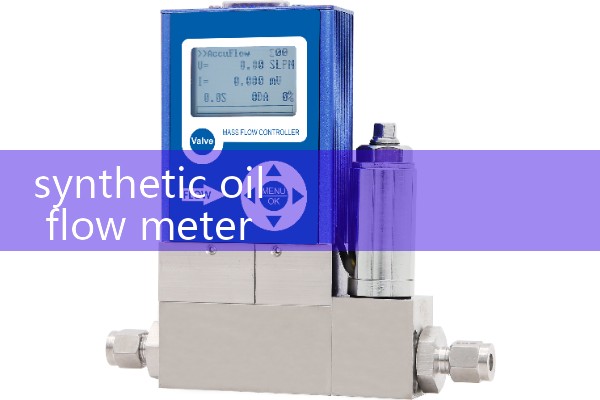 astomers and metals. A flow meter that works fine with water may swell, corrode, or degrade when exposed to high-grade synthetic lubricants.
#### The Best Technologies for Synthetic Oil
Given these challenges, the most effective flow meters for synthetic oils are those that rely on mechanical displacement or vibration, rather than electrical conductivity.
**1. Oval Gear Flow Meters (Positive Displacement)**
This is arguably the gold standard for high-viscosity synthetic oils. Oval gear meters work by trapping a fixed volume of fluid between two rotating gears. As the oil pushes through, the gears rotate, and each rotation corresponds to a precise volume. Because they rely on the physical displacement of the oil rather than its electrical properties, they are incredibly accurate (often ±0.5% or better) and unaffected by viscosity changes. They are ideal for hydraulic systems, lubrication circuits, and blending applications where precision is paramount.
**2. Coriolis Mass Flow Meters**
For applications where mass flow (kilograms per minute) is more important than volumetric flow (liters per minute), Coriolis meters are unmatched. They measure the mass of the fluid directly by analyzing the vibration of a tube. Synthetic oil is often sold by weight, and precise mass measurement ensures correct dosing in chemical processes. Coriolis meters are extremely accurate and can also measure density and temperature, providing a complete picture of the fluids health.
**3. Turbine Flow Meters (with Care)**
Turbine meters are a cost-effective option for low-viscosity synthetic oils. However, they require careful calibration. As the oil flows past a spinning rotor, the rotor speed is proportional to the velocity. The challenge is th
astomers and metals. A flow meter that works fine with water may swell, corrode, or degrade when exposed to high-grade synthetic lubricants.
#### The Best Technologies for Synthetic Oil
Given these challenges, the most effective flow meters for synthetic oils are those that rely on mechanical displacement or vibration, rather than electrical conductivity.
**1. Oval Gear Flow Meters (Positive Displacement)**
This is arguably the gold standard for high-viscosity synthetic oils. Oval gear meters work by trapping a fixed volume of fluid between two rotating gears. As the oil pushes through, the gears rotate, and each rotation corresponds to a precise volume. Because they rely on the physical displacement of the oil rather than its electrical properties, they are incredibly accurate (often ±0.5% or better) and unaffected by viscosity changes. They are ideal for hydraulic systems, lubrication circuits, and blending applications where precision is paramount.
**2. Coriolis Mass Flow Meters**
For applications where mass flow (kilograms per minute) is more important than volumetric flow (liters per minute), Coriolis meters are unmatched. They measure the mass of the fluid directly by analyzing the vibration of a tube. Synthetic oil is often sold by weight, and precise mass measurement ensures correct dosing in chemical processes. Coriolis meters are extremely accurate and can also measure density and temperature, providing a complete picture of the fluids health.
**3. Turbine Flow Meters (with Care)**
Turbine meters are a cost-effective option for low-viscosity synthetic oils. However, they require careful calibration. As the oil flows past a spinning rotor, the rotor speed is proportional to the velocity. The challenge is th『SILVER Official Website SERVICE』
User:waterflowmeterc6926Last Time:07/22/2026