

『Flow Meter Hydrant: Fire Department Water Main Flow Testers』Related information(v cone flow meter|rotary gas meter|gallon meter|gear meter|metal tube rotameter|glass tube rotameter|nutating disk meter|transit time ultrasonic flow meter|wedge flow meter|pd meters|hydraulic flow meter|ultrasonic water flow meter|water flow meter|air flow meter|magnetic water flow meter|oxygen flow meter|gas flow meter|argon flow meter|air velocity meter|gasoline flow meter|fuel flow meter|ultrasonic water meter|digital water meter|nitrogen flow meter|solid flow meter|Oxygen tank flow meter|digital water flow meter|diesel fuel flow meter|steam flow meter|02 flow meter|compressed air flow meter|oil flow meter|liquid flow meter)
Flow Meter Hydrant: Fire Department Water Main Flow Testers
Quick Answer: Fire departments need flow meter hydrant testers to verify water main capacity and prove pump performance. Silver Automation Instruments delivers clamp-on ultrasonic and inline electromagnetic meters that offer ±0.5% reading accuracy for hydrant flow testing. These portable testers log data on site and work on pipe sizes from DN50 to DN1200 without cutting into the water main.
Why Fire Departments and Water Authorities Use Flow Meter Hydrant Testers
Fire flow tests check if a water supply meets NFPA or local code requirements. Engineers open a hydrant, measure flow and residual pressure, and compare the numbers against design. A sudden drop in pressure at a target flow rate points to a bottleneck in the main. Many hydrant kits still use pitot tubes and analog gauges. That setup misses real-time fluctuations and forces crews to record data by hand. A fire department in Queensland, Australia replaced their pitot gauge with one of our clamp-on ultrasonic meters last year. They found the actual flow from a hydrant was 12% below the design curve during peak demand. This led them to replace a section of corroded ductile iron pipe that a simple pressure test had missed.
Our Flow Meters for Fire Water Main Testing
Silver Instruments supplies two main types of flow meters for hydrant and water main testing. The first is a portable clamp-on ultrasonic flow meter, model SI-2000F. The transducers strap onto the outside of an exposed pipe downstream of the hydrant. No drilling, no shutdown. The second is an inline electromagnetic flow meter, SIL-400E, which installs on a bypass or test header when a permanent monitoring point is needed. Both output 4-20 mA HART and Modbus RS485. You can connect them to our paperless recorder, model VR-8000, for data logging and reporting. The SI-2000F runs on a lithium battery for 8 hours of continuous use. Its IP68 transducers survive submersion and heavy rain. The SIL-400E uses PTFE lining and hastelloy electrodes. It handles potable water, raw water, and even brackish water used in some fire suppression systems.
Installation in the Field Without Service Interruption
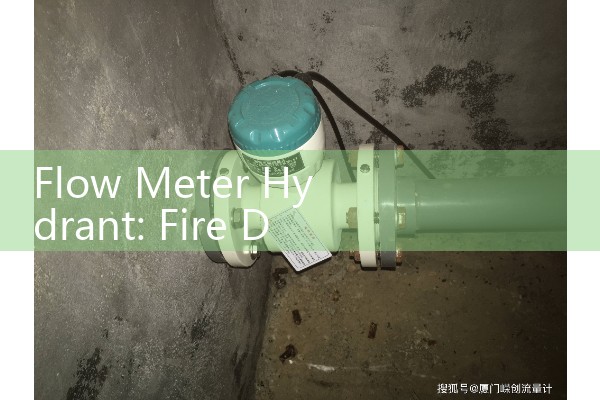
Clamp-on flow meters are the fastest way to test hydrant flow without isolating the main. Firefighters or utility crews clean the pipe surface, apply coupling gel, and strap the transducers. Total setup takes less than 10 minutes on a clean steel or ductile iron pipe. We have seen this many times on customer sites in Southeast Asia. A fire safety contractor in Manila, Philippines, uses the SI-2000F across 30 hydrant test points spread over a 15 km pipeline. They move from one location to the next and collect 5-minute flow profiles. The meter saves an imported CSV file via its built-in USB port. No laptop needed on site. For permanent test headers, the inline electromagnetic flow meter bolts between flanges. It requires a short pipe spool but stays in place for annual pump tests. The SIL-400E handles up to 16 bar (232 psi) working pressure and temperatures from -20 °C to 60 °C. At a customer site in Durban, South
What Data the Flow Tester Captures
The SI-2000F displays flow rate in m³/h, GPM, or L/s. It also shows velocity in m/s, totalized volume, and signal strength. Engineers record the flow during a stepped pressure test. They start at zero flow, open the hydrant valve gradually, and hold a steady flow for up to 2 minutes at each step. The pressure transducer that Silver Instruments supplies alongside the flow meter sends a 4-20 mA signal into the same recorder. This gives a complete flow vs pressure curve in one log file. Because the data is time-stamped, it easily aligns with pump start and stop events. In practice, this replaces four separate clipboards and a stopwatch. Most engineers skip the manual logging once they see the time saved.
How to Request a Quote for a Hydrant Flow Tester
Tell us your pipe material, outer diameter (OD), and wall thickness. For hydrant testing, the pipe is often Schedule 40 steel or ductile iron with a cement lining. If you test hydrants on both PVC and metallic pipes, we will quote a kit with two transducer pairs. Also share the expected flow range and pressure. A typical fire test covers 0 to 250 m³/h or higher. We will recommend the right ultrasonic transducers or inline meter size and send pricing in USD or AUD within 24 hours. Reach our product engineers at [email protected] or call +86-135-1213-1526. For a fast reply on WhatsApp, message 86-135-12131526. WeChat users can contact us at +86 13512131526.
FAQ About Flow Meter Hydrant Testers
Can the flow meter measure flow from a fire hydrant without cutting the pipe? Yes. The clamp-on SI-2000F straps onto the outside of the pipe downstream of the hydrant. This method does not interrupt water service and needs no hot work permit.
What accuracy do your hydrant flow meters achieve? The SI-2000F offers ±0.5% of reading for flow velocities above 0.3 m/s. The inline SIL-400E reaches ±0.2% of reading under fully developed flow conditions. Both meters ship with a factory calibration certificate.
Are the flow meters portable and battery operated? The clamp-on unit is portable. It weighs 4.2 kg and runs on a rechargeable lithium battery for 8 hours. The inline meter needs 24 V DC power from a test van or a portable battery pack.
Do you supply flow meters for saltwater or foam concentrate systems? Yes. We configure the SIL-400E with hastelloy electrodes and PTFE lining for saltwater fire mains and foam proportioning loops. The clamp-on meter also works on stainless steel and duplex pipes in these systems.
What is the typical lead time for a hydrant flow meter kit? Stock portable kits ship in 5 business days. A flanged inline meter with custom calibration takes 12 to 15 business days. We ship from Nanjing, China via DHL or FedEx to Australia, Southeast Asia, the Middle East, and Latin America.
For technical support or a detailed bid specification, email [email protected]. Our team can also join an online call to review your pipe layouts before you order.
 Hot Blog
 Related AD