

『Hall Effect Water Flow Meter: Low-Cost Rotational Inline Liquid Sensors』Related information(v cone flow meter|rotary gas meter|gallon meter|gear meter|metal tube rotameter|glass tube rotameter|nutating disk meter|transit time ultrasonic flow meter|wedge flow meter|pd meters|hydraulic flow meter|ultrasonic water flow meter|water flow meter|air flow meter|magnetic water flow meter|oxygen flow meter|gas flow meter|argon flow meter|air velocity meter|gasoline flow meter|fuel flow meter|ultrasonic water meter|digital water meter|nitrogen flow meter|solid flow meter|Oxygen tank flow meter|digital water flow meter|diesel fuel flow meter|steam flow meter|02 flow meter|compressed air flow meter|oil flow meter|liquid flow meter)
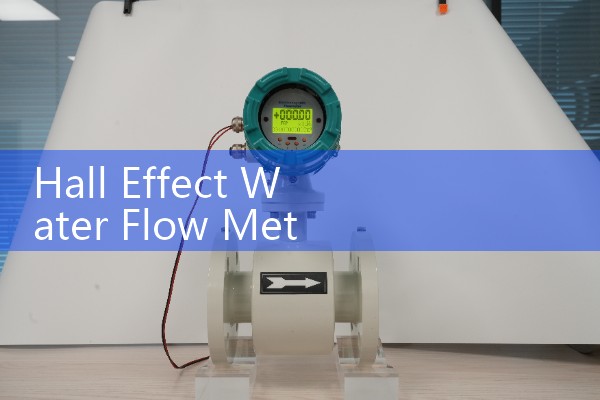
Hall Effect Water Flow Meter: Low-Cost Rotational Inline Liquid Sensors
Quick Answer
Hall effect water flow meters measure low-viscosity liquids like clean water by spinning a lightweight impeller inside a flow tube. A magnetic sensor reads the rotor speed and outputs a pulse or 4-20 mA signal proportional to flow rate. These low-cost inline sensors suit applications up to DN50 where an electromagnetic meter is too expensive and a turbine meter wears too fast.
What Is a Hall Effect Flow Meter?
A hall effect water flow meter, often called a water flow sensor or rotational flow meter, uses a permanent magnet embedded in an impeller. As liquid pushes the impeller, the magnet passes a hall chip each rotation. The chip generates a square wave pulse. Each pulse equals a fixed volume. Silver Automation Instruments supplies these meters in brass, nylon, or stainless steel bodies with NBR or Viton seals. You get a cost-effective digital flow signal without complex power supply needs. Our DH series starts at DN8 for micro flow and goes up to DN50 for cooling water lines.
How It Works in Real Industrial Environments
In practice, most engineers skip the theory and look at 3 things: repeatability, clogging risk, and lifetime. The hall sensor has no mechanical contact, so wear concentrates on the bearing and shaft. Tests show that in clean water at 25 Celsius and below 10 bar, the impeller lasts more than 5 years. In groundwater with sand, the nylon version can fail within months. So we recommend a Y-strainer or mesh filter upstream. We have seen this on customer sites many times, especially in bore water applications in Africa.
Key Specifications and Output Options
Flow ranges from 0.3 L/min up to 200 L/min, depending on line size. Standard accuracy is ±2% of reading below 10% of full scale, improving to ±1% above 25% of full scale. Max temperature is 80 Celsius for standard nylon/brass models. Outputs: NPN pulse (open collector), 4-20 mA two-wire, or RS485 Modbus RTU on request. Power supply: 5-24 V DC for pulse versions. Process connection: BSP or NPT male threads. Silver Automation Instruments provides ATEX Zone 2 rated versions upon request for a paint factory in Vietnam last year.
Where These Sensors Fit Best (and Where They Fail)
Here is the thing: these meters are not universal. They shine on clean, low-viscosity fluids with minimal magnetite or rust particles. Think RO permeate, city water batching, chiller recirculation, or dosing pump monitoring. A water treatment contractor in Australia uses 40 pcs of our hall sensor in a multi-story building for sub-metering tenant cold water, connected to an IoT gateway via pulse input. They spent 60% less than an ultrasonic clamp-on solution.
Avoid using them on fluids with high solids, sticky fluids like gluco
Comparison: Hall Effect vs. Turbine vs. Electromagnetic for Clean Water
When a buyer asks us for a clean water meter, we compare three types. A turbine flow meter has similar cost but mechanical bearings and higher pressure drop at low flow. A hall effect meter gives a lower starting flow, typically 0.15 L/min on DN15, while a turbine needs 0.5 L/min. Electromagnetic meters cost 3x to 5x more but give zero obstruction and ±0.5% accuracy. So if your budget is under 80 USD and you need a simple totalizer with no display, a hall flow sensor wins. We have shipped over 5000 units to 20-plus countries, and the warranty return rate stays below 0.8%.
Ordering and Customization from Silver Automation Instruments
Send us your pipe size (DN), flow range (L/h or m³/h), fluid type, operating pressure, and temperature. Based on this, we will propose a model, body material, seal material, and output option. Our sales team uses email: [email protected], Tel: +86-135-1213-1526, or WhatsApp: 86-135-12131526. For urgent inquiries, connect on WeChat: +86 13512131526. Typical lead time is 3-5 working days for standard DN15-DN40 hall meters. We ship by DHL, FedEx, or sea freight to Southeast Asia, Middle East, Africa, and South America.
Frequently Asked Questions
Can a hall effect water meter handle hot water up to 90 Celsius?
Standard nylon and brass models are rated for 80 Celsius. For hot water up to 100 Celsius, we can supply a stainless steel body with Viton seals and high-temperature hall sensor chip. Inform our engineers during ordering.
Can these meters work with chemicals like sodium hypochlorite?
We do not recommend hall meters for aggressive chemicals. The nylon impeller and brass body can corrode. Use our chemical-resistant electromagnetic or PTFE-lined turbine meters. For mild acids below 1% concentration, consult us.
What is the maximum operating pressure for DN25 hall flow sensor?
Standard DN25 brass models withstand 16 bar at 25 Celsius. At 80 Celsius, derate to 10 bar. Steel versions go up to 40 bar.
Do I need a straight pipe run?
Inline hall meters need a short run: 5 DN upstream and 3 DN downstream when installed after an elbow. We also offer integrated flow conditioners in some series.
Can I get a local display?
Yes, we can add a battery-powered LCD display for total and rate. Or you can connect to a panel meter or PLC via pulse. Many customers use our paperless recorder for data logging.
 Hot Blog
 Related AD