

『Flow Meter Accuracy Standard Requirements: Understanding ISO 17025 Calibration Benchmarks』Related information(v cone flow meter|rotary gas meter|gallon meter|gear meter|metal tube rotameter|glass tube rotameter|nutating disk meter|transit time ultrasonic flow meter|wedge flow meter|pd meters|hydraulic flow meter|ultrasonic water flow meter|water flow meter|air flow meter|magnetic water flow meter|oxygen flow meter|gas flow meter|argon flow meter|air velocity meter|gasoline flow meter|fuel flow meter|ultrasonic water meter|digital water meter|nitrogen flow meter|solid flow meter|Oxygen tank flow meter|digital water flow meter|diesel fuel flow meter|steam flow meter|02 flow meter|compressed air flow meter|oil flow meter|liquid flow meter)
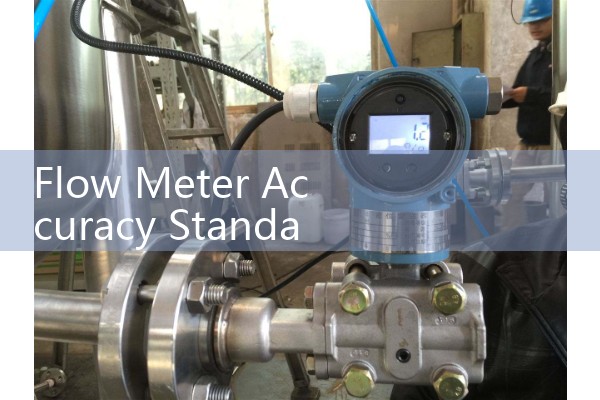
Flow Meter Accuracy Standard Requirements: Understanding ISO 17025 Calibration Benchmarks
Quick Answer
ISO 17025 does not set flow meter accuracy classes. It defines how a calibration laboratory proves measurement uncertainty and traceability. A flow meter accuracy claim is only useful when a valid ISO 17025 calibration certificate supports the number.
What ISO 17025 Actually Covers
Many users expect ISO 17025 to give a fixed limit such as 0.2 percent or 0.5 percent. In practice, it does not. The standard covers the competence of the calibration lab. It covers the reference equipment, the environment, the method, and the calculation of measurement uncertainty. The meter accuracy limit comes from the manufacturer specification or a user requirement. ISO 17025 proves how well the meter was compared against a known reference at the time of calibration.
That difference matters in the field. A factory test report can show a good number but without an uncertainty budget the number is not complete. An ISO 17025 certificate shows the possible error range around the measured value. For example, a meter may read 100 litres but the certificate may state an expanded uncertainty of 0.3 percent at a 95 percent confidence level with k equal to 2. That means the true value sits within a small band. This is what auditors and plant engineers need for custody transfer, batch dosing, and regulatory checks.
Accuracy Claims Need a Calibration Benchmark
Flow meter suppliers publish accuracy percentages in many ways. Some state percent of reading. Some state percent of full scale. Some state both. Without a clear benchmark, you cannot compare one quotation against another. A magnetic flow meter for water might say plus or minus 0.2 percent of reading. A vortex flow meter for steam might say plus or minus 1 percent of reading. A thermal mass flow meter for compressed air might say plus or minus 1 percent of full scale plus 0.5 percent of reading. These numbers are not directly equal. The first one is tighter at low flow. The second is common for velocity type meters. The third is weak at low flow because full scale error dominates.
Here is the thing. A valid ISO 17025 calibration certificate adds the missing context. It shows the exact measured points, the reference standard, and the expanded uncertainty. If a supplier cannot provide this certificate, the printed accuracy is only a design expectation. It is not a verified result for the specific meter you will receive.
ISO 17025 Calibration Benchmarks: What to Check
When you read a flow meter calibration certificate, check the unique certificate number and the date first. Confirm that the reference standard is traceable to a national metrology institute or an equivalent signatory. Then look at the measured points. They should cover the flow range you actually run. A test at a single point near full flow tells you little about low flow accuracy. There is no shortcut here.
Check the expanded uncertainty at each point. A common statement is plus or minus 0.2 percent of reading at k equal to 2. That means the result has a 95 percent confidence level. Check the fluid or gas used during calibration. Water calibration may not predict performance on honey, diesel, or high pressure gas. Check the temperature and pressure. Check the pipe size and flow range. A DN50 electromagnetic flow meter calibration may include points at 1.5 m³/h, 5 m³/h, 10 m³/h, and 15 m³/h. If your process runs at 0.8 m³/h most of the time, ask for a low flow point.
Common Flow Meter Accuracy Values by Technology
Coriolis mass flow meters often state plus or minus 0.1 to 0.2 percent of rate for liquids and gases. This is a strong choice for mass flow measurement because the meter directly measures mass. Electromagnetic flow meters often state plus or minus 0.2 to 0.5 percent of reading for conductive liquids. The liquid must meet a minimum conductivity, normally 5 µS/cm for standard models. Vortex flow meters often state plus or minus 0.75 percent of reading for liquids and plus or minus 1 percent of reading for gas and steam. Oval gear flow meters can state plus or minus 0.2 percent for diesel and fuel oil when calibrated on a similar viscosity.
Factory Test Reports Are Not Enough
A factory test report may be a simple functional check. It may confirm the electronics power up and the output signal is present. It may not include an uncertainty budget or traceable reference standards. Some suppliers call this a calibration. It is not the same as an ISO 17025 calibration. We have seen this on customer sites many times. A water utility in the Philippines compared three magnetic flow meters on the same DN150 line. Only one supplier attached a full ISO 17025 certificate with expanded uncertainty below 0.2 percent. The other two supplied basic production test reports. The three meters showed a spread of nearly 0.7 percent after installation. That spread caused a billing dispute between two zones.
Last year a food ingredient plant in Vietnam ordered an oval gear flow meter for honey batching. The meter was accurate on water during a factory test. The operator noticed a 1.2 percent offset at 25 centipoise viscosity. The supplier had not calibrated on the actual fluid. The ISO 17025 certificate did not state honey or a similar high viscosity fluid. This is a common issue in food and fuel applications.
How Silver Instruments Handles Calibration
Silver Automation Instruments supplies flow meters for water and wastewater, oil and gas, chemical, food and beverage, and marine applications. We keep calibration facilities for electromagnetic, oval gear, and variable area flow meters. Our magnetic flow meter calibration bench covers DN10 to DN300. Our Coriolis mass flow meter benches cover small mass rates from 0.5 kg/h up to higher production rates. We also arrange gas calibration on air or nitrogen for thermal mass and vortex meters.
We provide an ISO 17025 calibration certificate for many models. The certificate lists measured points, reference standards, environmental conditions, and expanded uncertainty. We recommend testing on the actual process fluid when possible. For water and wastewater projects, water calibration is often enough. For diesel, honey, or high viscosity oil, specify the fluid and viscosity in centipoise. Housing options include integral or remote types. For hazardous areas, we supply ATEX Zone 1 or Zone 2 configurations with 4-20 mA HART output.
FAQ
Does ISO 17025 set a flow meter accuracy class? No. ISO 17025 sets requirements for the calibration laboratory. The flow meter supplier or the user defines the accuracy limit. The certificate shows whether the meter meets that limit with a known uncertainty.
What should an ISO 17025 flow meter calibration certificate include? It should include a unique certificate number, test date, reference standard, traceability chain, measured points, fluid, temperature, pressure, and expanded uncertainty. The uncertainty statement normally uses k equal to 2 for a 95 percent confidence level.
How often should I recalibrate a flow meter? It depends on the fluid, wear, and plant audit rules. Many plants recalibrate custody transfer meters every 12 months. Less critical meters may run 24 months. Metal tube Coriolis meters with clean fluids can run longer, while oval gear meters on fuel may need more frequent checks.
What is the difference between percent of reading and percent of full scale? Percent of reading means the error scales with the actual flow. Percent of full scale means the error is fixed against the full scale range. At low flow, percent of full scale generates a larger relative error. Always ask the supplier which basis they use.
What details should I send for an ISO 17025 calibration quote? Send your medium, pipe size in DN, flow range, pressure in bar, temperature in °C, and the required accuracy. That gives us enough data to recommend a flow meter model and a calibration plan.
Contact Silver Instruments at Tel +86-25-68650347, WhatsApp +86-25-52155837, or WeChat +86 15365082610. You can also visit flow-meter.com.au for technical data sheets.
 Hot Blog
 Related AD