

『Ultrasonic Flow Meter Flare Gas: High-Velocity Stack Line Vapor Controls』Related information(v cone flow meter|rotary gas meter|gallon meter|gear meter|metal tube rotameter|glass tube rotameter|nutating disk meter|transit time ultrasonic flow meter|wedge flow meter|pd meters|hydraulic flow meter|ultrasonic water flow meter|water flow meter|air flow meter|magnetic water flow meter|oxygen flow meter|gas flow meter|argon flow meter|air velocity meter|gasoline flow meter|fuel flow meter|ultrasonic water meter|digital water meter|nitrogen flow meter|solid flow meter|Oxygen tank flow meter|digital water flow meter|diesel fuel flow meter|steam flow meter|02 flow meter|compressed air flow meter|oil flow meter|liquid flow meter)
Ultrasonic Flow Meter Flare Gas: High-Velocity Stack Line Vapor Controls
Quick Answer: Flare gas measurement in high-velocity stack lines requires a meter that handles wet gas, wide turndown, and rapid composition changes. Ultrasonic flow meters from Silver Automation Instruments provide direct mass flow and velocity reading without moving parts, ideal for vapor control and emissions reporting. Engineers choose them for their high rangeability and ATEX Zone 1 certification in DN50 to DN300 sizes.
Why Flare Gas Flow Measurement Matters
Oil and gas plants, refineries, and petrochemical sites in Southeast Asia, the Middle East, and Latin America must comply with strict environmental regulations. Flare stack monitoring is not optional. A leaking valve or process upset can send high-velocity vapor to the flare header. Operators need reliable flow data to report emissions and avoid fines. In many countries like Malaysia and Nigeria, regulators demand daily or real-time mass balance data. A clamp-on or inline ultrasonic meter is often the only practical solution when the pipe runs full bore and the fluid is a multi-phase slurry of hydrocarbon vapors, steam, and liquid droplets.
High-Velocity Stack Line Vapor Control Challenges
Stack line vapor can hit 30 to 80 m/s during a flaring event. Standard differential pressure meters lose accuracy at low flow and create permanent pressure loss. Thermal mass meters struggle with wet gas, condensing moisture, and changing gas composition. Mechanical meters like turbine or oval gear cannot survive the vibration and solids. Ultrasonic technology solves these issues with no obstruction in the pipe. Silver Instruments supplies inline ultrasonic flow meters with transducer frequencies optimized for gas. We use 200 kHz to 1 MHz sensors that work with methane, ethane, nitrogen, steam, and CO2 mixtures. The meter calculates gas velocity and speed of sound to determine molecular weight changes. This is critical for flare gas because the gas composition shifts minute by minute.
Our Flare Gas Ultrasonic Meter Features
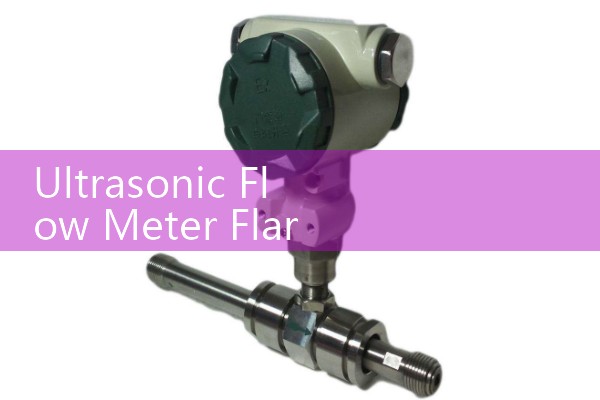
We recommend the Silver Instruments SUL-200G inline gas ultrasonic flow meter. It comes in DN50, DN80, DN100, DN150, DN200, and DN300 sizes. The wetted material is 316L stainless steel, with Hastelloy C transducer windows for corrosive service. The meter has no moving parts, no pressure loss, and a 100:1 turndown ratio. Accuracy is ±1.5% of reading from 0.3 m/s up to 85 m/s. Process temperature range is -40 °C to +150 °C. Pressure rating goes up to 40 bar standard, with an option for 100 bar. Signal output is 4-20 mA HART, Modbus RTU, and a pulse for totalized flow. The enclosure is ATEX Zone 1 / IECEx rated. For flare gas, we add a purging port and a drainage plug because liquid condensation can build up at low flow.
Installation Notes from Real Sites
In 2022 a refinery in Saudi Arabia installed eight SUL-200G meters on flare headers. The pipe was DN150 schedule 40, carbon steel. They needed 10 diameters straight run upstream and 5 downstream. The plant team used our built-in flow conditioner option to shorten the run to 5D upstream when space was tight. Most engineers
Application Example: Steam-Assisted Flare
A petrochemical plant in Mexico used a steam-assisted flare. They injected 1,200 kg/h of low-pressure steam into the flare tip. The resulting wet gas had 20% to 35% volume fraction of water vapor. A thermal mass meter could not handle the condensation, and the Vortex meter gave false signals due to droplet impact. We proposed a DN200 SUL-200G with titanium transducer faces. We also corrected the sound velocity profile for steam using the live molecular weight calculation. The plant achieved 1.5% accuracy in mass flow even at 5 m/s. They now use the data for an environmental reporting portal that updates every hour.
Quick Specification Guide
Pipe size: DN50 to DN300 (custom up to DN600). Process gas: methane, flare gas, off-gas, CO2 rich streams. Velocity range: 0.3 m/s to 85 m/s. Process connection: flanged ANSI 150# or 300#. Meter type: inline, two-path or four-path for custody transfer. Outputs: 4-20 mA HART, Modbus, pulse. Power: 24 V DC or 100-240 V AC. Certification: ATEX, IECEx, SIL 2 optional.
How to Request a Quote for Your Flare Gas Line
Send us your operating pressure in bar, temperature in °C, pipe size (DN), gas composition if known, and the required flow range in kg/h or Nm3/h. We will select the right ultrasonic meter and provide a drawing within 24 hours. Typical prices for a DN100 inline flare gas meter start at USD 3,200 ex-works. Larger sizes and four-path systems are quoted on request.
Silver Automation Instruments
Tel: +86-135-1213-1526
Whatsapp: 86-135-12131526
WeChat: +86 13512131526
Email: [email protected]
FAQ
Can your ultrasonic meter measure low flow during purge?
Yes, with a 100:1 turndown, our meter detects flow from 0.3 m/s. During nitrogen purge at 2 m/s it still reads accurately.
Does the meter work with liquid droplets in the gas?
Yes, the ultrasonic signal penetrates a modest liquid mist. We recommend a drain port and vertical pipe run to prevent accumulation.
What is the typical lead time for DN150 ATEX flare gas meters?
Standard DN150 with EX certification ships in 3 weeks. Custom four-path units take 5 to 6 weeks.
Do you offer clamp-on meters for flare stacks?
Clamp-on gas meters are only reliable for spot checks on thin wall pipe. For permanent stack line vapor control we strongly recommend inline meters.
How do you calibrate for mixed gas composition?
We use a speed-of-sound algorithm with temperature and pressure compensation. The meter computes molecular weight and mass flow in real time. You can also input a fixed gas mix via Modbus.
 Hot News
 Related AD