

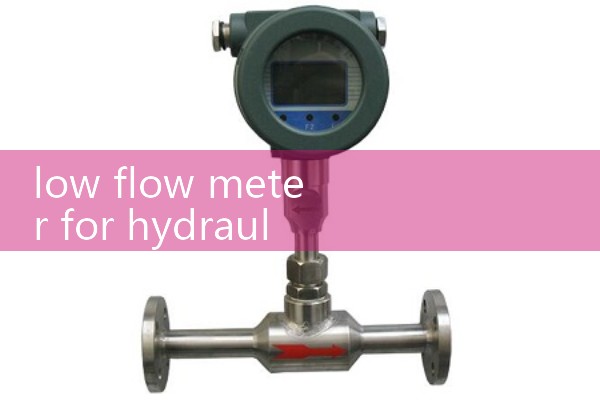
『low flow meter for hydraulic test bench』Related information(v cone flow meter|rotary gas meter|gallon meter|gear meter|metal tube rotameter|glass tube rotameter|nutating disk meter|transit time ultrasonic flow meter|wedge flow meter|pd meters|hydraulic flow meter|ultrasonic water flow meter|water flow meter|air flow meter|magnetic water flow meter|oxygen flow meter|gas flow meter|argon flow meter|air velocity meter|gasoline flow meter|fuel flow meter|ultrasonic water meter|digital water meter|nitrogen flow meter|solid flow meter|Oxygen tank flow meter|digital water flow meter|diesel fuel flow meter|steam flow meter|02 flow meter|compressed air flow meter|oil flow meter|liquid flow meter)
 Here is a detailed article on the topic of low flow meters for hydraulic test benches.
---
### Precision in Miniature: The Critical Role of Low Flow Meters in Hydraulic Test Benches
In the world of industrial hydraulics, power is often associated with high pressure and massive flow rates. However, the most demanding and insightful tests often occur at the opposite end of the spectrum. When evaluating the efficiency, leakage, and precision control of hydraulic components—from servo valves to small actuators—reliable measurement of low flow rates is non-negotiable. This is where the specialized low flow meter becomes an indispensable tool for any serious hydraulic test bench.
A hydraulic test bench is a controlled environment designed to verify the performance, durability, and safety of pumps, valves, motors, and cylinders. While standard flow meters excel at measuring flows in the range of tens to hundreds of liters per minute, a different class of instrument is required for the "micro" flows often critical for diagnostics. These low flow meters typically measure rates from just a few milliliters per minute (ml/min) up to perhaps 10-20 liters per minute (L/min), but with a level of accuracy and repeatability that standard turbine or gear meters often cannot provide.
**Why are low flow measurements so critical on a test bench?**
First and foremost is **leakage testing**. All hydraulic spool valves, such as servo-proportional valves, have internal clearances that inevitably allow some fluid to pass even when the valve is commanded to be closed. This "spool leakage" or "null leakage" is a key indicator of valve wear, manufacturing quality, and overall health. Measuring this leakage—often a trickle of oil—requires a met
 Hot Product
 Related AD