

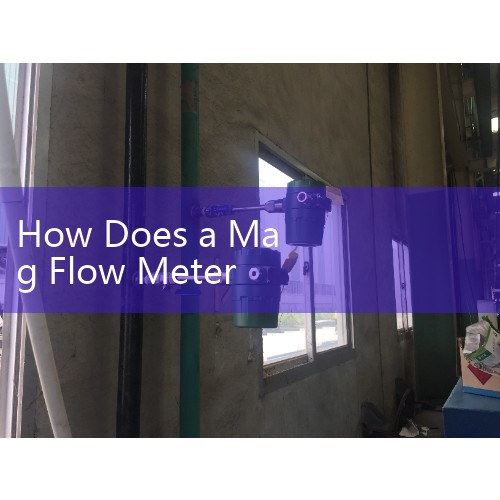
『How Does a Mag Flow Meter Work: Employs electromagnetic coils to sense the ionic voltage of moving water without any physical flow path obstructions.』Related information(v cone flow meter|rotary gas meter|gallon meter|gear meter|metal tube rotameter|glass tube rotameter|nutating disk meter|transit time ultrasonic flow meter|wedge flow meter|pd meters|hydraulic flow meter|ultrasonic water flow meter|water flow meter|air flow meter|magnetic water flow meter|oxygen flow meter|gas flow meter|argon flow meter|air velocity meter|gasoline flow meter|fuel flow meter|ultrasonic water meter|digital water meter|nitrogen flow meter|solid flow meter|Oxygen tank flow meter|digital water flow meter|diesel fuel flow meter|steam flow meter|02 flow meter|compressed air flow meter|oil flow meter|liquid flow meter)
How Does a Mag Flow Meter Work?
Quick Answer: A mag flow meter employs electromagnetic coils to sense the ionic voltage of moving water without any physical flow path obstructions. The meter reads that small voltage and converts it to flow rate. It works for raw water, potable water, wastewater, sludge, and many chemical mixtures, as long as the liquid has enough electrical conductivity.
This principle is the reason water plants and industrial sites in Australia, Southeast Asia, Latin America, the Middle East, and Africa replace mechanical meters with mag flow meters. Silver Automation Instruments is an electromagnetic flow meter manufacturer and supplier for sizes from DN15 to DN2000.
Working Principle Without Obstructions
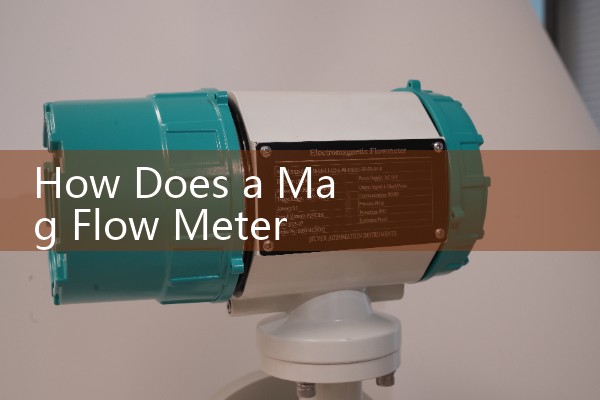
A magnetic flow meter works on the law of electromagnetic induction. The meter body has electromagnetic coils mounted on each side of the pipe. These coils create a magnetic field that sits perpendicular to flow. Two electrodes inside the liner touch the liquid and measure the tiny voltage produced by moving conductive ions. Water with dissolved calcium, magnesium, chloride, or other salts acts as the conductor. The faster the water moves, the higher the voltage. The converter changes that millivolt signal into flow rate in m3/h, L/s, or GPM.
Here is the thing. Many people assume the meter measures pressure or velocity directly. The meter does not. The meter measures the ionic voltage that appears between the electrodes. That is why conductivity matters.
Why No Physical Flow Path Obstructions Matters
Because the bore is open, the meter creates almost no pressure drop. That is useful for gravity fed pipes, long transfer lines, and plant water networks with limited pump head. No moving parts means no rotor, no bearing, and no gear to jam. In practice, the open bore and the lack of moving parts reduce repair costs in raw water lines that carry sand, grit, or fibrous solids.
We have seen this on customer sites many times. A water utility in central Vietnam replaced a DN200 mechanical turbine meter with a remote mount mag flow meter. The river water carried fine sand, and the turbine meter failed every eight months. The mag flow meter used a PTFE liner and 316L electrodes to handle the abrasive flow.
Key Specifications and Output Signals
Silver Automation Instruments mag flow meters cover pipe sizes from DN15 to DN2000. Liner options include PTFE, hard rubber, neoprene, and PFA. Electrode options include 316L stainless steel, Hastelloy C, titanium, and tantalum. The standard converter gives 4-20 mA HART, pulse output, RS485 Modbus, and a local display. Accuracy is commonly ±0.5 percent of reading. For process control or custody transfer, higher accuracy models with ±0.2 percent of reading are available.
Pressure and temperature limits depend on the liner and flange class. Standard water service works up to 80 °C with hard rubber and up to 120 °C with PTFE. Flange ratings follow PN10, PN16, PN25, or ANSI 150. For seawater desalination plants, we often quote a rubber lined mag flow meter with 316L electrodes and grounding rings.
For hazardous area installations, ATEX Zone 1 versions are available for oil and gas produced water lines or solvent transfer areas.
Where a Mag Flow Meter Works and Where It Does Not
A mag flow mete
Installation Rules That Keep the Meter Accurate
Install the meter only in a full pipe. The electrodes need continuous contact with the liquid. Standard installations need about 10 pipe diameters upstream and 5 pipe diameters downstream for a stable flow profile. Avoid placing the meter at the highest point of a pipeline because trapped air causes signal instability. For plastic or lined pipes, use grounding rings or earth straps. Most engineers skip the grounding step and then see noisy readings. If the pipe can empty between batches, select a model with empty pipe detection.
Recommended Models for Water and Wastewater
For most water and wastewater sites, we recommend a compact electromagnetic flow meter with built-in converter for DN15 to DN300. For larger lines or underground pits, a remote mount mag flow meter with an IP68 sensor works better. Both types accept 24 VDC or 220 VAC power and send 4-20 mA HART to PLC or SCADA systems.
If you send us flow range, pipe size DN, liquid type, conductivity, pressure in bar, and temperature in °C, we can return a quote with lead time, freight cost to your port, and installation notes. Price depends on pipe size, liner, electrode material, and flange rating.
FAQ: Mag Flow Meter for Water and Wastewater
Question: Does a mag flow meter work with tap water?
Answer: Yes. Normal tap water has enough dissolved ions to produce a stable signal. Check that conductivity is above 20 µS/cm at the operating temperature.
Question: What is the minimum pipe size for a mag flow meter?
Answer: Standard inline models start at DN15. For small chemical dosing lines, we can also supply sanitary and compact versions.
Question: Can a mag meter measure sewage or sludge?
Answer: Yes. The open bore handles sludge and wastewater with grit and solids. Choose a hard rubber or PTFE liner based on temperature and chemical compatibility.
Question: How do I know if I need PTFE or hard rubber liner?
Answer: Use hard rubber for cold water and municipal wastewater. Use PTFE for higher temperatures, aggressive chemicals, or strict hygienic requirements.
Question: Can the output connect to a PLC or SCADA system?
Answer: Yes. The converter outputs 4-20 mA HART as standard. Optional outputs include pulse, RS485 Modbus, and Profibus for plant networks.
Request a Quote from Silver Automation Instruments
Tell us your flow range, pipe size DN, liquid type, conductivity, pressure in bar, temperature in °C, and output signal. We will recommend one mag flow meter model and send a formal quotation. You can reach our sales team at Tel: +86-25-68650347, WhatsApp: +86-25-52155837, or WeChat: +86 15365082610. For more product details, visit flow-meter.com.au.
 Hot Product
 Related AD