

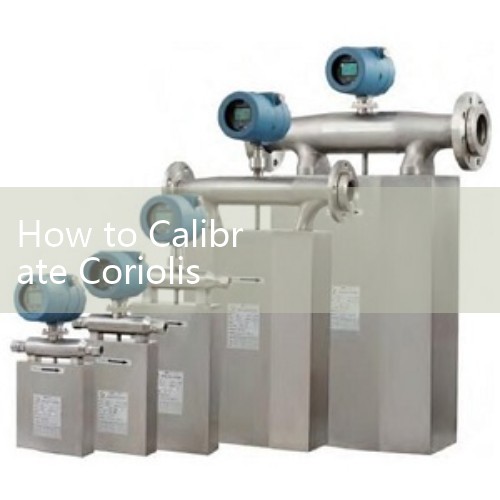
『How to Calibrate Coriolis Flow Meter: Perform a field zero-point calibration under full system pressure with zero actual fluid flow.』Related information(v cone flow meter|rotary gas meter|gallon meter|gear meter|metal tube rotameter|glass tube rotameter|nutating disk meter|transit time ultrasonic flow meter|wedge flow meter|pd meters|hydraulic flow meter|ultrasonic water flow meter|water flow meter|air flow meter|magnetic water flow meter|oxygen flow meter|gas flow meter|argon flow meter|air velocity meter|gasoline flow meter|fuel flow meter|ultrasonic water meter|digital water meter|nitrogen flow meter|solid flow meter|Oxygen tank flow meter|digital water flow meter|diesel fuel flow meter|steam flow meter|02 flow meter|compressed air flow meter|oil flow meter|liquid flow meter)
How to Calibrate a Coriolis Flow Meter: Field Zero-Point Calibration Under Full System Pressure
Quick Answer: A field zero-point calibration on a Coriolis flow meter is done with zero actual fluid flow while the pipe is fully wet and system pressure stays at normal operating level. This removes measurement offset caused by pipe stress, temperature, static pressure, and vibration. Run the zero routine from the transmitter menu after the line is isolated and the fluid has stopped moving.
Most engineers skip zero calibration until mass total errors appear in the control room. In practice, a Coriolis meter can drift after installation because the sensor body reacts to flange stress, temperature, and process pressure. A field zero-point calibration under full system pressure with zero actual fluid flow is the fastest way to restore accuracy.
What Field Zero-Point Calibration Means
Field zero-point calibration means adjusting the meter baseline when flow is zero. The transmitter reads a small signal from the sensor tubes at rest. If this baseline is not set to zero under actual process conditions, every mass flow total and density reading shifts. On a DN25 line running 1200 kg/h, a small zero offset can become a large totalizer error over one week.
Step by Step Procedure for Coriolis Zero Calibration
First, confirm that the sensor is installed and wired correctly. The flow tube must be completely full of liquid. No air pocket should remain. Then close the downstream isolation valve. Close the upstream valve. Keep the process pressure at normal operating level. For example, a chemical line in Vietnam that runs 8 bar and 45 °C must stay at that pressure during calibration. Do not depressurize the pipe.
Wait for the fluid to stop moving. The meter needs a stable temperature. Wait 5 to 15 minutes after isolation. Fluids with viscosity around 200 cP need more time to settle. Then read the live zero or mass flow value on the transmitter display. If the value is outside the manual tolerance, start the zero calibration routine.
On Silver Automation Instruments Coriolis meters with 4-20 mA HART output, enter the service menu and select zero calibration. Follow the on-screen prompts. The transmitter runs a zero averaging routine for 30 to 120 seconds. Do not touch the pipe during this time. Do not start a pump or agitator nearby. Vibration causes a bad zero.
After the routine finishes, check the zero point again. A good result for a DN15 meter on a light fuel oil line should be close to 0.0 kg/h on the display. On larger meters such as DN100, a small residual value may be normal. Write the value in the maintenance log. If the zero point is too high, repeat the procedure after checking for trapped gas or pipe strain.
Why Full System Pressure Matters
Many technicians calibrate zero with an empty pipe or at atmospheric pressure. That does not reflect normal operation. The sensor tubes respond to static pressure. If the line runs at 20 bar but zero is set at 0 bar, the zero offset will return when the process restarts. For desalination plants and food beverage lines that need stable batching, this error shows up as underdosing or overdosing.
Full system pressure also keeps the pipe fully wetted. A partially full pipe creates a two-phase condition. Coriolis meters cannot zero correctly with bubbles. We have seen this on customer sites many
When to Perform a Field Zero-Point Calibration
Run this calibration after first installation. Run it again after changing the sensor orientation, gaskets, or flanges. Perform it if the flow reading at rest is outside the manual specification. In batch plants for paints and adhesives, run zero calibration before a new campaign. A paint manufacturer in Southeast Asia checks zero every Monday morning on its Silver Automation Instruments Coriolis meter. This takes 10 minutes and avoids off-spec batches.
Also check zero when temperature changes more than 30 °C from the last calibration. For hot water or steam condensate lines, thermal expansion of the pipe can shift the meter zero. If the meter shows a negative mass flow when the pump is off, a field zero correction is needed.
Recommended Coriolis Meter Settings from Silver Automation Instruments
Silver Automation Instruments supplies Coriolis mass flow meters from DN15 to DN200. The meters support mass flow, density, and temperature output over 4-20 mA HART or RS485 Modbus. Typical accuracy is 0.1 percent of rate for liquids and 0.5 percent for gas. Zero stability depends on sensor size. For a DN15 meter, zero stability is around 0.02 kg/h. For a DN50 meter, zero stability is around 0.15 kg/h. Always compare the actual zero value with the zero stability specification in the manual. For hazardous area metering, ask about the ATEX Zone 1 version with PT100 temperature input.
Ask us for a quote with your pipe size, fluid name, flow range in kg/h, temperature in °C, and pressure in bar. Send the details to Silver Automation Instruments. Our engineers can confirm the correct zero calibration procedure for your process.
Contact Silver Automation Instruments for Coriolis flow meter selection or calibration support. Tel: +86-25-68650347. WhatsApp: +86-25-52155837. WeChat: +86 15365082610.
FAQ: Coriolis Flow Meter Field Zero-Point Calibration
Q1. How long does a Coriolis zero calibration take?
A field zero calibration typically takes 5 to 15 minutes including isolation and settling time. The meter internal routine itself takes 30 to 120 seconds.
Q2. Can I calibrate zero with process fluid in the pipe?
Yes. The pipe must be full of process fluid and there must be zero actual flow. Isolate the line and keep system pressure normal. Do not empty the pipe.
Q3. What causes a Coriolis meter to drift from zero?
Pipe stress, flange misalignment, temperature changes, pressure changes, entrained gas, and nearby vibration can all shift the zero point.
Q4. How often should I perform a zero-point calibration?
Check zero after installation, after maintenance, before critical batch campaigns, and whenever the live zero reading is outside the manual specification. Many plants do this monthly or before each production run.
Q5. Does Silver Automation Instruments offer calibration help for existing meters?
Yes. Send your meter size, fluid, operating pressure, temperature, and current zero reading. We can guide you through the procedure or recommend a replacement if the sensor has severe drift.
 Hot Product
 Related AD