

『E&h Clamp On Ultrasonic Flow Meter Installation Guide: Non-Invasive Metering』Related information(v cone flow meter|rotary gas meter|gallon meter|gear meter|metal tube rotameter|glass tube rotameter|nutating disk meter|transit time ultrasonic flow meter|wedge flow meter|pd meters|hydraulic flow meter|ultrasonic water flow meter|water flow meter|air flow meter|magnetic water flow meter|oxygen flow meter|gas flow meter|argon flow meter|air velocity meter|gasoline flow meter|fuel flow meter|ultrasonic water meter|digital water meter|nitrogen flow meter|solid flow meter|Oxygen tank flow meter|digital water flow meter|diesel fuel flow meter|steam flow meter|02 flow meter|compressed air flow meter|oil flow meter|liquid flow meter)
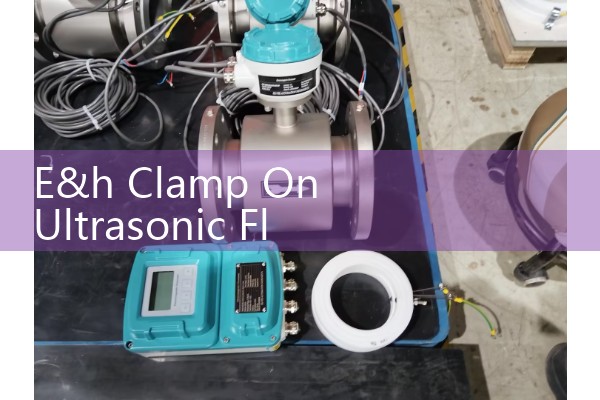
E&H Clamp On Ultrasonic Flow Meter Installation Guide: Non-Invasive Metering
Quick Answer: The E&H clamp-on ultrasonic flow meter mounts on the outside of the pipe. You enter pipe diameter, wall thickness, liner, fluid type, and temperature. The transmitter calculates the sensor spacing. A clean liquid service with good straight pipe run can give 0.5 to 1 percent accuracy without cutting the pipe.
This guide is written by Silver Automation Instruments, a flow meter manufacturer and supplier for industrial water, wastewater, chemical, food, and oil and gas plants. We serve customers in Southeast Asia, Oceania, Latin America, Africa, and the Middle East.
What Non-Invasive Metering Actually Means
Non-invasive metering means the sensors sit on the outside pipe wall. There is no process shutdown, no drilling, and no flange work. The transducer sends an ultrasonic pulse through the pipe wall into the liquid. The meter measures transit time difference. Flow velocity comes from that difference. Multiply velocity by pipe area and you get volumetric flow. The E&H Prosonic Flow W 400 clamp-on guide follows this principle.
This method works well on clean liquids with low solids and low gas content. Conductivity does not matter because the meter uses sound, not electrical resistance. For comparison, an electromagnetic flow meter often needs 5 µS/cm or more. Viscosity up to 500 cP is normally fine. The pipe must be full. Empty or partially full pipes give no reading.
Straight Pipe Run and Sensor Position
The E&H guide states 10D upstream and 5D downstream for a simple pipe bend. D means pipe inside diameter. For a DN100 pipe, that is 1000 mm of straight pipe before the sensor. For a pump or control valve upstream, use 15D to 20D. We have seen this on customer sites many times. A short straight run causes swirl and the reading drifts.
On a horizontal pipe, avoid the top and bottom. Air gathers at the top and sediment sits at the bottom. Mount the sensors on the left side or right side. Some technicians call this the 3 and 9 position on a clock face. On a vertical pipe, flow should move upward to keep the line full.
Pipe Preparation Before You Mount
Clean the pipe surface with a wire brush or sand cloth. Remove rust, paint flakes, scale, and old tape. The transducer needs direct contact through coupling compound. Use the coupling pad or gel supplied by E&H. Do not use general purpose grease. Air gaps under the sensor reduce signal strength and cause unstable readings.
Check the pipe temperature before you select the transducer. Standard clamp-on sensors handle up to 80 °C. High temperature versions can reach 200 °C. For steam or superheated water, a clamp-on flow meter is often the wrong tool. Send us your fluid type, temperature in °C, and pressure in bar before you order.
E&H Transducer Spacing and Mounting Modes
The transmitter calculates the required distance between the two transducers. Use the mounting rail or a steel tape. Do not measure by eye. A spacing error of 2 mm on a DN80 pipe can shift the signal path enough to lose measurement. On pipes DN200 and above, the mounting rail keeps both sensors aligned on the centerline.
The E&H calculator may select a Z path for large pipes or a V path for smaller pipes. Do not change this setting unless you can verify signal strength. The transmitter display shows signal quality and sound velocity. A good installation shows stable values. If signal quality i
Lined Pipes and Problem Pipe Materials
Lined pipes are a special case. Concrete, bitumen, or thick rubber liners absorb ultrasound. The E&H guide asks for liner material and thickness. If the liner is dense and well bonded, the signal may still pass. If the lining is loose or has air pockets, the meter will not read reliably. We have seen a wastewater plant in Malaysia try to measure through an old bitumen lined steel pipe. The meter could not lock on until the crew moved to a clean unlined section.
Carbon steel, stainless steel, and PVC are good pipe materials. Concrete and fiberglass with air pockets cause problems. The installation guide also cautions about thick scale inside the pipe. A 5 mm layer of hard scale can block the signal path.
Silver Instruments Alternative for Process and Utility Lines
Silver Automation Instruments offers clamp-on ultrasonic flow meters as a lower cost alternative to E&H. Our units support DN15 to DN600, 0.5 percent of reading accuracy on clean liquids, 4-20 mA HART, Modbus RTU, optional PT100 inputs, and ATEX Zone 1 rated versions for hazardous areas. We supply portable and fixed mount versions. The same installation rules apply. Clean the pipe, enter correct data, respect straight run. If you do that, the meter works. If you skip that preparation, no brand can save the installation.
In practice, most engineers skip this part. They mount first and then wonder why the reading is noisy. We suggest reading the E&H installation guide or our quick start manual before you touch the transducer. Last year a customer in Vietnam asked us for a clamp-on meter after a failed inline turbine install. The pipe was DN150 carbon steel with clean cooling water. Our clamp-on unit read within 0.7 percent of the plant reference meter.
If you want a price, send us your pressure (bar), temperature (°C), pipe size (DN), and flow range. That lets us quote the right clamp-on meter. Contact Silver Automation Instruments at Tel: +86-25-68650347. WhatsApp: +86-25-52155837. WeChat: +86 15365082610. You can also search flow-meter.com.au for product specifications.
FAQ
Can a clamp-on ultrasonic flow meter measure wastewater? It can measure wastewater if the solid content is low and the pipe stays full. For raw sewage with heavy solids and gas, an electromagnetic flow meter is often better. We can supply both types.
What is the minimum straight pipe required? Use 10D upstream and 5D downstream for a single bend. Use 15D to 20D after pumps or control valves. For a DN150 pipe, 10D equals 1500 mm.
Does the E&H clamp-on meter work on lined pipes? It can work if the liner is thin, dense, and well bonded. Loose liners or thick rubber liners with air pockets block the signal. The transmitter needs accurate liner thickness.
How accurate is a clamp-on installation? On a clean liquid and a properly prepared pipe, typical accuracy is 0.5 to 1 percent of reading. Poor installation can double or triple that error.
Do I need to shut down the process to install? No. That is the main advantage. The sensors mount on the outside of a running pipe. You only need access to the pipe surface.
For more application help, contact Silver Automation Instruments at +86-25-68650347. WhatsApp +86-25-52155837. WeChat +86 15365082610. Search flow-meter.com.au for clamp-on ultrasonic flow meter models and price guides.
 Hot Blog
 Related AD